Coffee Legends Create a World-Class Collection at the UC Davis Library
Coffee is embedded in the daily routines of roughly 2.5 billion people around the world. Behind every cup lies a complex story of agriculture, chemistry, entrepreneurship, craft, global trade and community — a story that is now taking shape at the UC Davis Library.
Direct from the Source
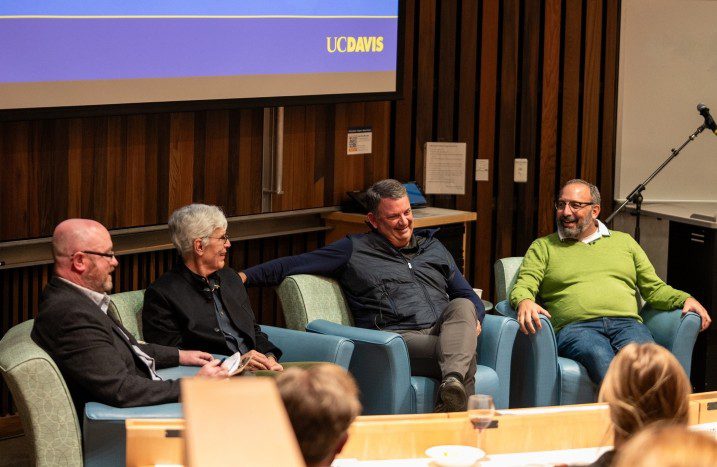
Jerry Baldwin, Russ Kramer and SCA’s Chief Research Officer Peter Giuliano explored the history and future of coffee at Savor: Coffee Unfiltered, hosted by the UC Davis Library and the Robert Mondavi Institute for Wine & Food Science, on January 28, 2026. Watch the recording.
The library recently received donations of rare books, photographs, business records and other archival materials from Gerald “Jerry” Baldwin, co-founder of Starbucks and former president of Peet’s Coffee; Russ Kramer, president of Hacienda La Minita, and veteran of Green Mountain Coffee and the Coffee Connection; and from the Specialty Coffee Association (SCA). Together, their contributions will provide unique insight into the science, culture and commerce of one of the world’s most significant trade commodities.
“These three collections complement and support the research leadership of the UC Davis Coffee Center, while expanding the library’s world-class collections on food and drink,” said Audrey Russek, who leads the library’s strategic initiatives around distinctive collections in food, wine and other beverages.
She added, “They illuminate the origins of specialty coffee and why that history matters; not just for understanding the past, but for shaping the industry’s future.”
A window into specialty coffee’s early days
At the heart of the collection is Baldwin’s deeply personal archive, which chronicles the early years of Starbucks and the growth of specialty coffee in the United States. His donation includes:
- The original manifesto, a poster handwritten by the late Gordon Bowker, that was once propped outside Starbucks’ original location
- The company’s first guest book, signed by many of the founders’ family, friends, and others who helped out in the construction of their first store
- Scrapbooks documenting Starbucks’ formative years
- Photographs of the first Starbucks delivery car — a used sedan with the backseat removed and a block of wood fashioned behind a headlight to prop it up
- A Seattle Times newspaper article written by Don Duncan in 1971 that Baldwin recalls put their burgeoning coffee shop on the map
- Financial records from the first 17 years of Starbucks
- Original score sheets from taste tests of various roastings, and more
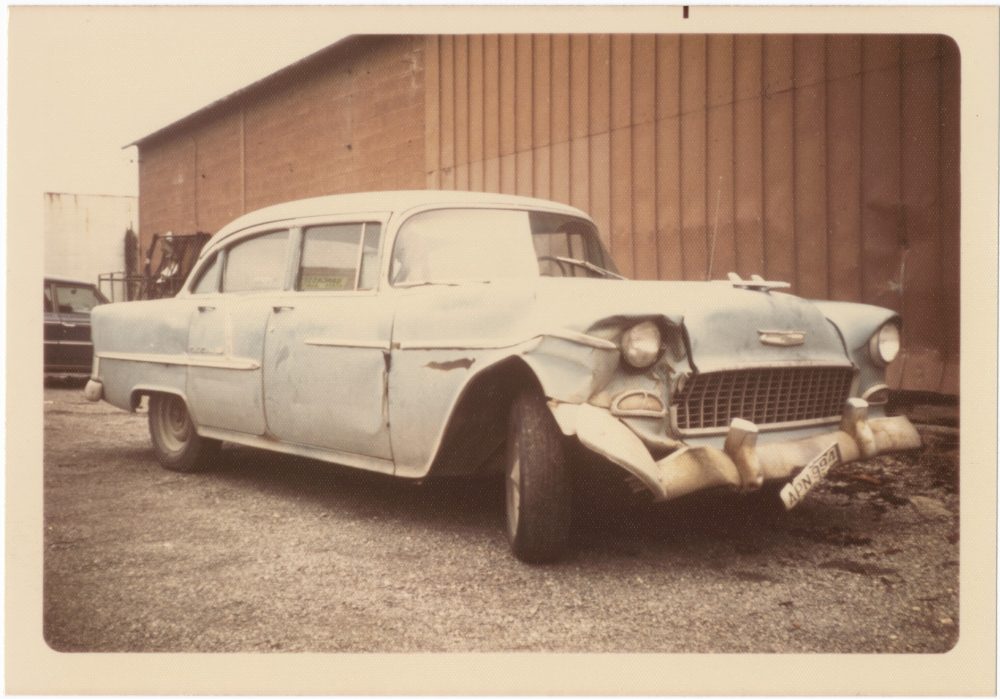
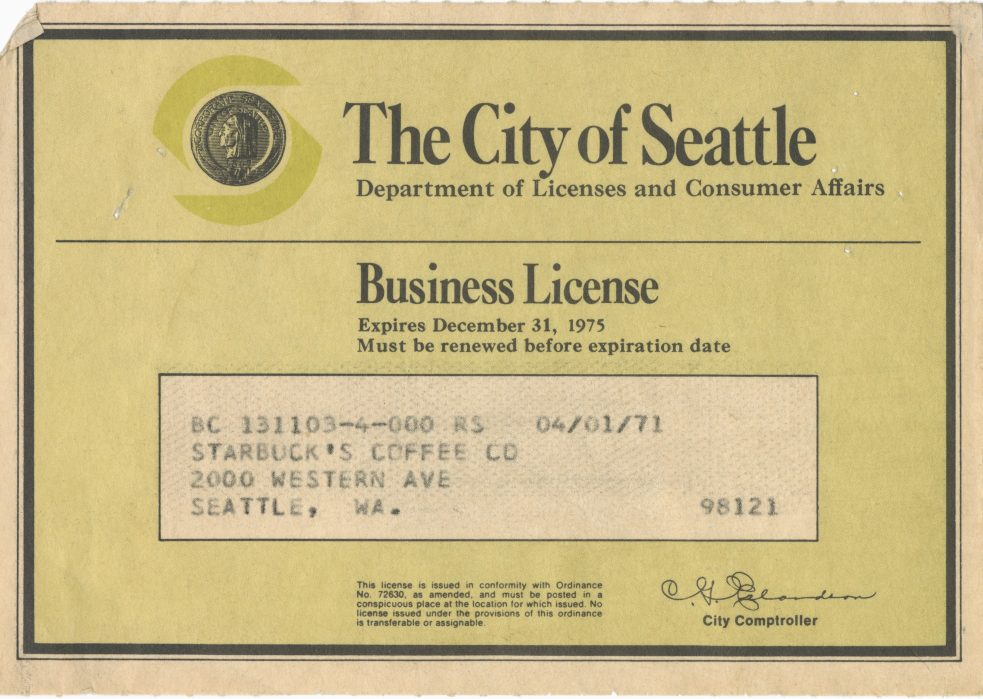
“When I started opening up boxes, one of the first things I found were the bound volumes from the accountant of the annual financial statements of the first 17 years of Starbucks. I thought someone’s going to want these,” Baldwin said. “Then I heard that Darrell Corti had some of his stuff at the UC Davis Library and that piqued my interest. And I just became so impressed with the team they have there.”
The collection offers primary source material documenting how early entrepreneurs approached sourcing, roasting and customer experience at a time when specialty coffee was still an emerging concept. Taken together, the materials offer scholars a rare, ground-level view of how three friends — Baldwin, Bowker and Zev Siegl — who were driven by a quest for a great cup of coffee, would ultimately help shape the specialty coffee movement.
“The amount of apocrypha that flies around the internet is huge,” Baldwin said. “My hope is people who are interested can turn to these documents as a reference and understand what it was truly like at the beginning.”
“There’s a big history and if we’re going to preserve it, now’s the time.”
— Jerry Baldwin, co-founder of Starbucks and former president of Peet’s Coffee
Preserving the global supply chain
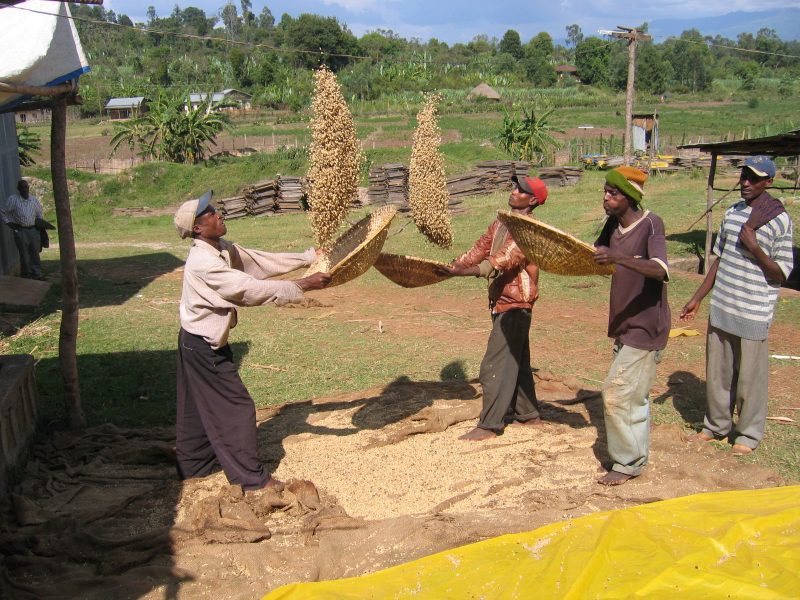
While Baldwin’s archive tells the story of coffee’s rise as a consumer juggernaut, Russ Kramer’s gift highlights the agricultural and international dimensions of the industry. Kramer, president of Hacienda La Minita, has spent decades building relationships with growers and advancing traceability and quality within the global coffee trade.
His materials include emails capturing the global conversation around coffee tariffs; records from his four decades in the specialty coffee industry and his work developing coffee programs for companies like Panera Bread, McDonald’s, Dunkin’ Donuts, and Alberston’s/Safeway; and other documents that have served as primary sources for books such as Uncommon Grounds: The History of Coffee and How It Transformed Our World by Mark Pendergrast.
Kramer became “obsessed with the complexity of coffee” at a young age while working for his uncle at Green Mountain Coffee, and began collecting coffee-related literature in the early 1990s. Over time, that interest grew into a significant personal library, shaped by both professional connections and a habit of seeking out coffee books wherever his travels took him.
Among the most notable items in the Russ Kramer Coffee Book and Pamphlet Collection is a book from 1687 that predates modern specialty coffee by centuries. Kramer acquired the rare book on behalf of Hacienda La Minita’s parent company Distant Lands Coffee and facilitated its donation to the library. Le bon usage du thé, du caffé, et du chocolat pour la preservation & pour la guerison des maladies by French physician Nicolas de Blégny is now the fourth oldest book about coffee in the library’s collections.
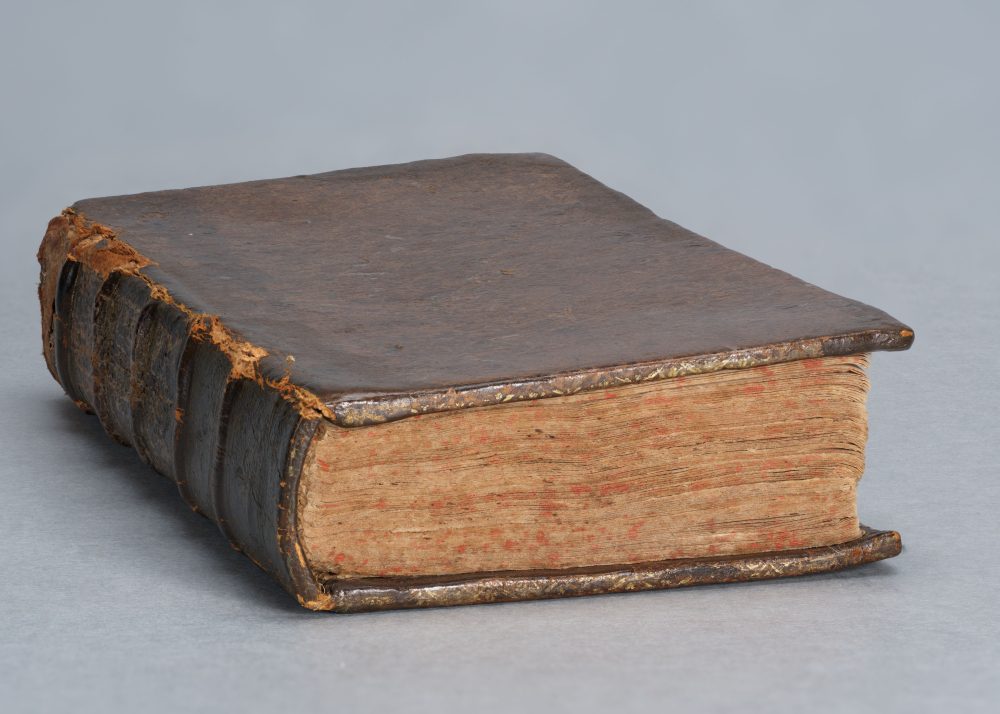
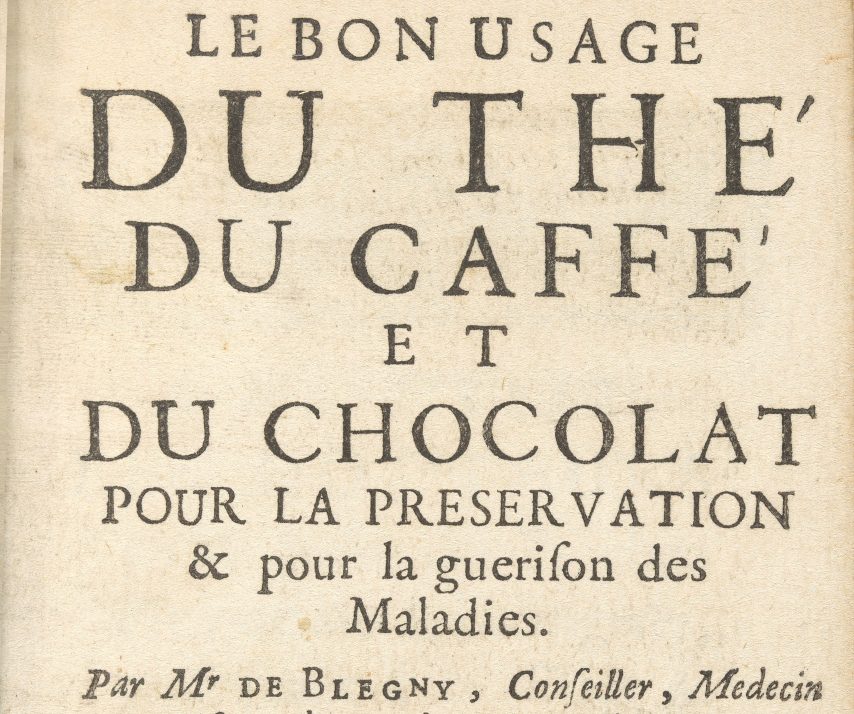
“When the book dealer in New York brought it out to me, it was almost like someone saying, ‘Oh, you’re looking for the Holy Grail? Here you go.’” Kramer laughed, recalling his discovery of the treasure.
With Kramer’s donation, the UC Davis Library can offer original sources that deepen understanding of how coffee is grown, processed and traded, and how knowledge moves between farmers, scientists and buyers. The materials offer insight into the evolution of sourcing practices and the growing emphasis on sustainability, transparency and quality.
Professional standards
Rounding out the trio is a substantial archive from the Specialty Coffee Association’s institutional library. The SCA is a global organization that has helped professionalize and standardize the industry during the past several decades.
The SCA records encompass more than a hundred boxes, including books, educational documents and early drafts of publications that later became foundational texts for coffee professionals worldwide. These resources trace how shared definitions, standards and research agendas emerged across a rapidly expanding global industry.
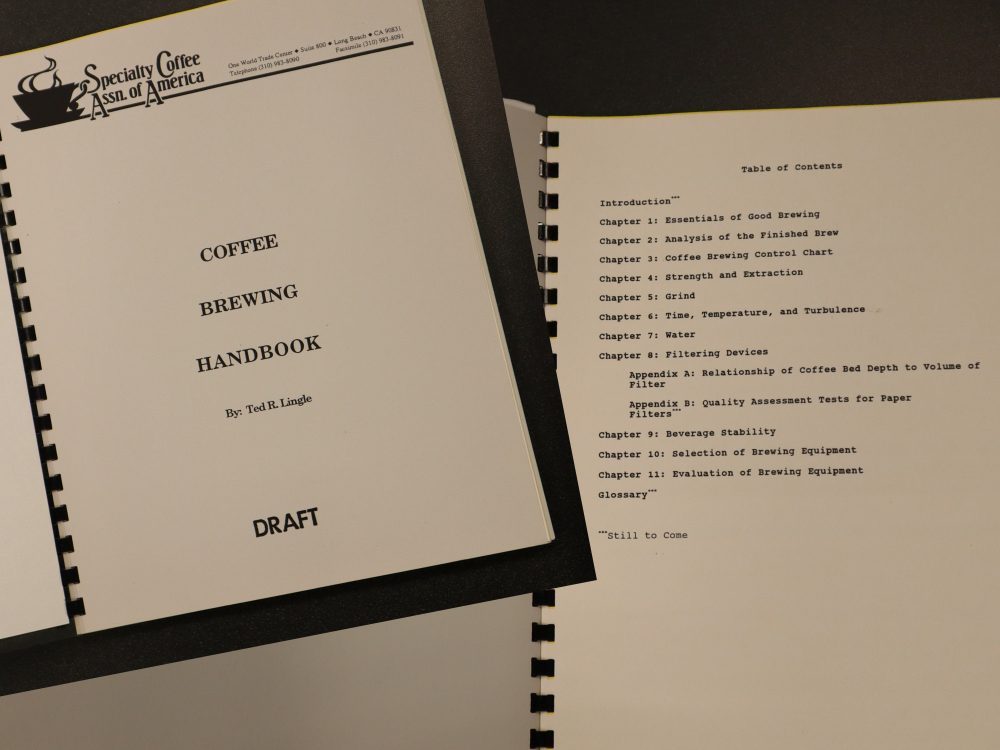
“That sense of teaching, training and bringing new people in, is what makes SCA different from other trade organizations. People are open and willing to share within the industry group,” said Ted Lingle, the association’s co-founder and former president. “I think the SCA’s records will show the power of cooperative, collective action as a fundamental driving force for the industry.”
For historians, economists and food-systems scholars, the SCA archive will offer a rare view of an industry preserving its past and creating its future.
The library is processing the collections to make them available for research, study and instruction.
Anchored by science and scholarship
The collections also align closely with the work of the UC Davis Coffee Center, the first academic research and teaching facility in the U.S. dedicated entirely to the study of coffee. Part of the campus’s College of Engineering, the center has garnered national attention for its research on coffee chemistry, quality and sustainability.
“These collections give us the historical and cultural context that complements our scientific work,” said Bill Ristenpart, Child-Whitaker Endowed Professor of Chemical Engineering and director of the UC Davis Coffee Center. “Coffee is one of the most widely consumed beverages in the world, yet there is still so much to learn about it. Having these collections available at the UC Davis Library will allow us, as researchers, to connect cutting-edge research with the people, practices and ideas that shaped the modern coffee landscape.”
The collections will facilitate interdisciplinary research, in keeping with the university’s approach to research and the nature of the beverage itself.
“We see every day how people build connections over a cup of coffee. It’s a beverage that builds community,” said William Garrity, university librarian and vice provost of digital scholarship. “Those connections extend to research, as well. Coffee sits at the intersection of UC Davis’ leadership in agriculture, food science and culture, and these three collections reinforce those links.”
A living archive for a global commodity
What makes the UC Davis coffee collection distinctive is its scope. Rather than focusing on a single facet, it brings together the science of flavor and chemistry, the stories of industry pioneers, insights into agriculture and sourcing, and the history of a global consumer marketplace.
“There are people all over the world with a lifetime of knowledge on coffee they’ve collected and it’s sitting in isolation,” Kramer said. “What the library offers is the opportunity for a generation to bring that all together in one, objective place.”
Kramer continued, “The UC Davis Library will be the center of the world for coffee research — without a doubt. I’m convinced of that.”
Online Exhibit: Brewed Awakening
Visit the library’s online exhibit Brewed Awakening: The Evolution of the Coffee Industry to learn more about the history, science and consumer culture of coffee.
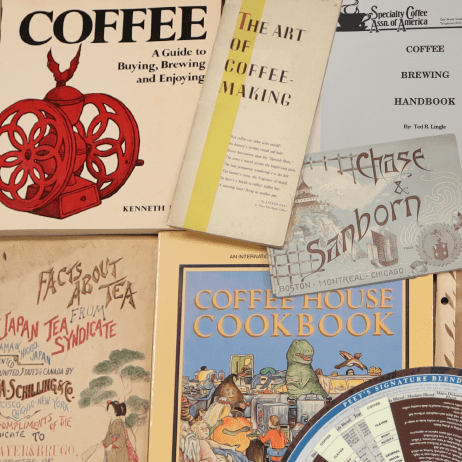
Coffee and Tea Collections
Explore the library’s growing Coffee and Tea Collections to find more rare books, photographs, and scientific, technical and business records.
Sarah Colwell is the CEO of SC2 Strategic Communications and a freelance writer who specializes in serving higher education clients.