Tools of the Preservation Trade
Celebrate Preservation Week with an inside look at our Preservation Lab
Happy Preservation Week! This annual event, hosted by the American Librarian Association, raises awareness of the roles that libraries and cultural institutions play in preserving physical and digital collections. As the Preservation and Conservation Specialist at UC Davis Library, I rely on a variety of carefully chosen precision tools to repair and protect books and other research materials in our collections. Today I’m sharing a few of my “go-to’s” — the tools that I reach for most often on any given project in the library’s Preservation Lab. Some may surprise you!
Bone Folder
A bone folder might look simple, but it’s an essential preservation tool. Used in bookbinding, conservation and paper craft, this smooth tool helps create crisp folds, flatten materials, and guide delicate work without damage. As the name suggests, bone folders are traditionally made from bone, and they come in a variety of sizes and shapes.
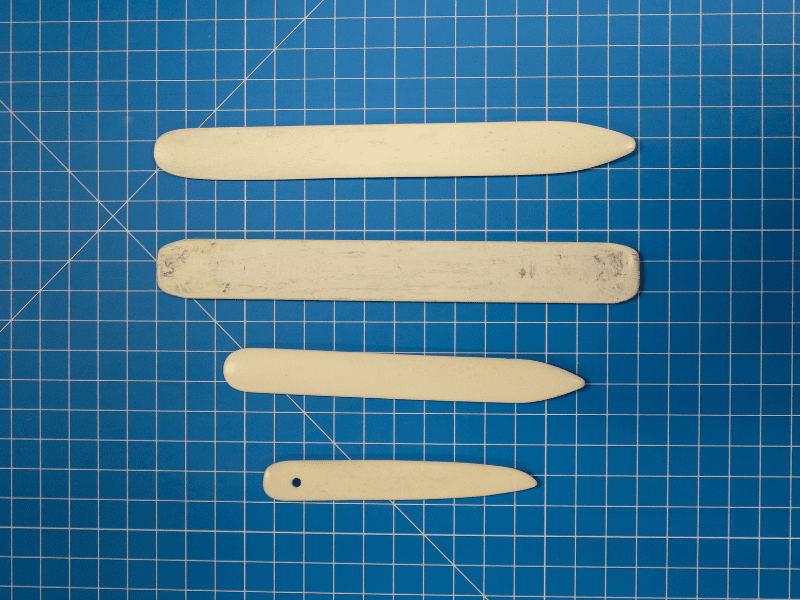
Teflon Bone Folder
A Teflon bone folder is an upgrade for serious bookbinders and paper artists. Made from 100% Teflon (also known as Polytetrafluoroethylene (PFTE)), this non-stick, ultra-durable tool is perfect for scoring, creasing and burnishing without leaving unwanted shiny marks on paper or delicate materials. With a pointed end for detail work and a chiseled edge for folds, a Teflon bone folder is all about clean, controlled accuracy.
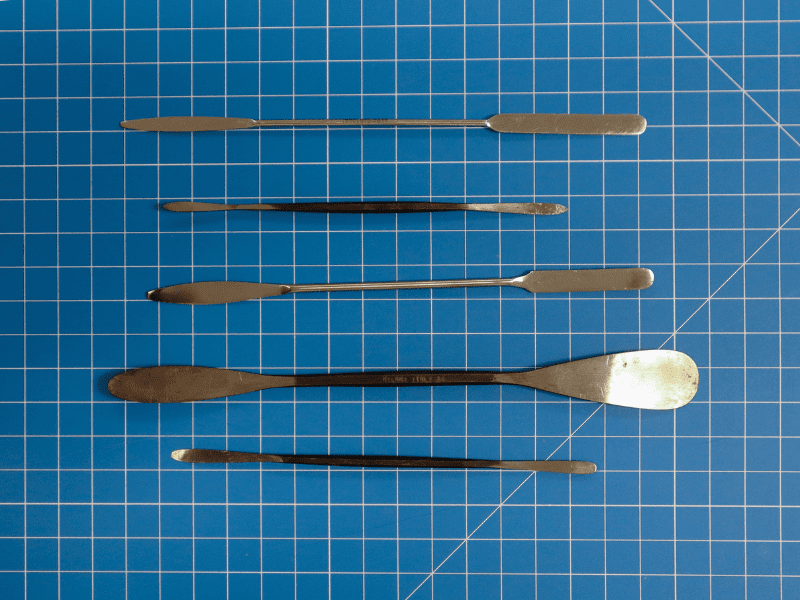
Microspatula
Meet the microspatula, the small tool that does the most important work in the Preservation Lab at our library! With its thin, flexible blade and finely tapered tip, it’s designed to lift labels, separate fragile pages, apply adhesives, help clean spines, and remove metal fasteners. Microspatulas come in a variety of shapes and sizes that aid in careful repairs and give conservators control where it matters most.
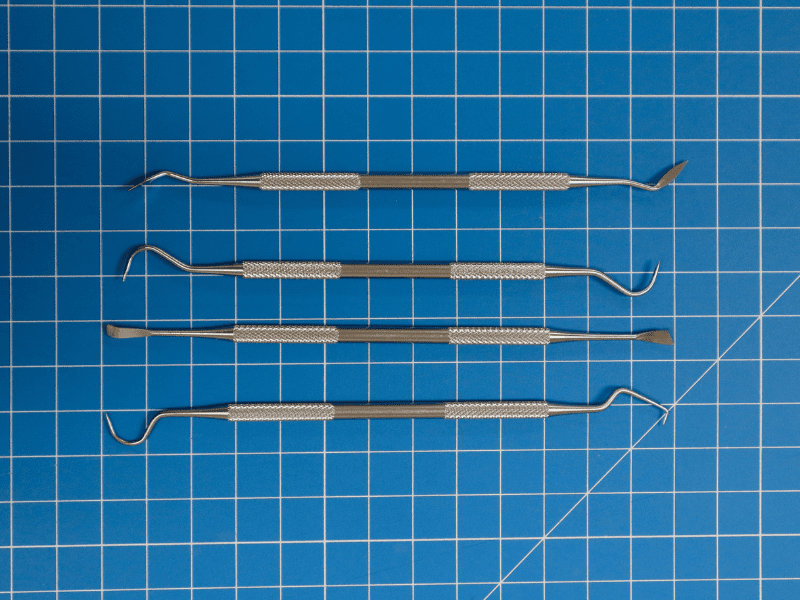
Dental Tools
Dental tools aren’t just for the dentist’s chair — they’ve found a second life at the conservation bench! With their fine points, curves and edges, these instruments are perfect for lifting old adhesives, teasing apart fragile fibers and working in the tiniest spaces without causing damage. What was designed for careful, detailed work in one field translates seamlessly into preserving books and paper. When I need to be meticulous, patient and exceptionally gentle, I reach for a dental tool.
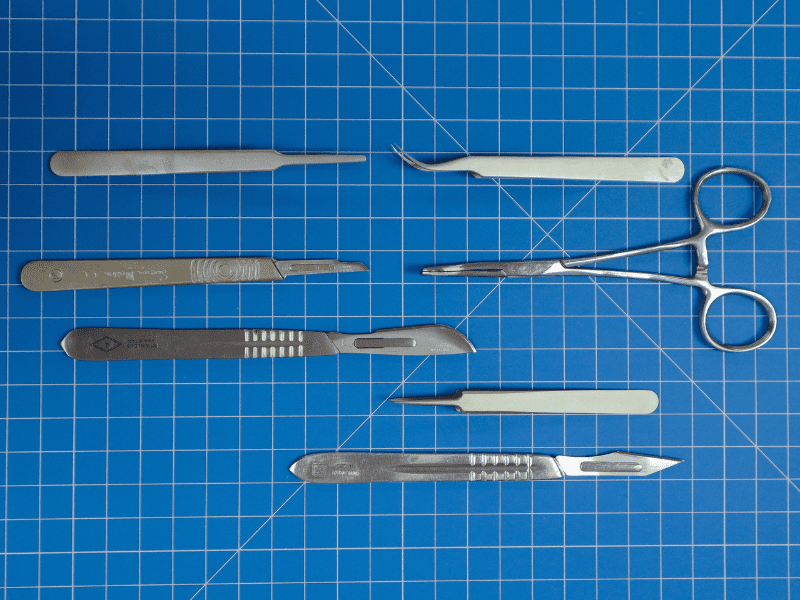
Scalpels & Precision Tweezers
Like dental tools, medical tools like scalpels and precision tweezers have been adopted by preservation specialists and play a critical role in our treatments. Scalpels and tweezers allow us to make careful cuts and adjustments by lifting fibers, removing adhesives and repairing delicate materials without causing further damage.
Bookbinding Tools
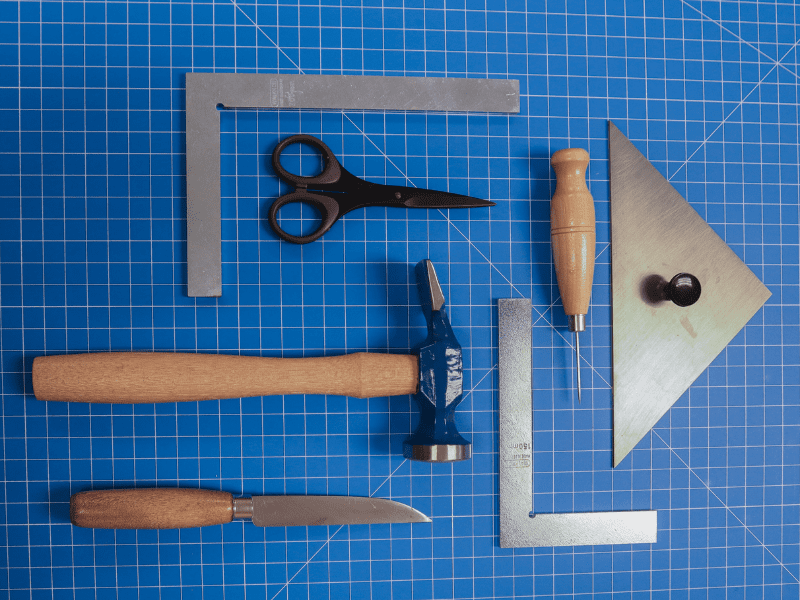
From awls to rulers, and presses to hammers, bookbinder instruments are crucial to repair, reshape and stabilize fragile materials. Each tool plays a role in ensuring accuracy, control and minimal intervention. It’s not just craftsmanship — it’s the careful preservation of one page at a time.
Related
- Preserving the Past to Ensure a Future of Discovery
- Peek into Book Repair (Instagram reel)
- How to Make a Phase Box (Instagram reel)
- Margaret B. Harrison Preservation Lab