The Dean of American Winemaking
A few years after the Repeal of Prohibition, Georges de Latour traveled to France in search of a new winemaker who could bring European methods to BV. At the Paris Viticultural Experimental Station, he met André Tchelistcheff (1901-1994), who agreed to join BV as its new winemaker in time for the 1938 harvest season.
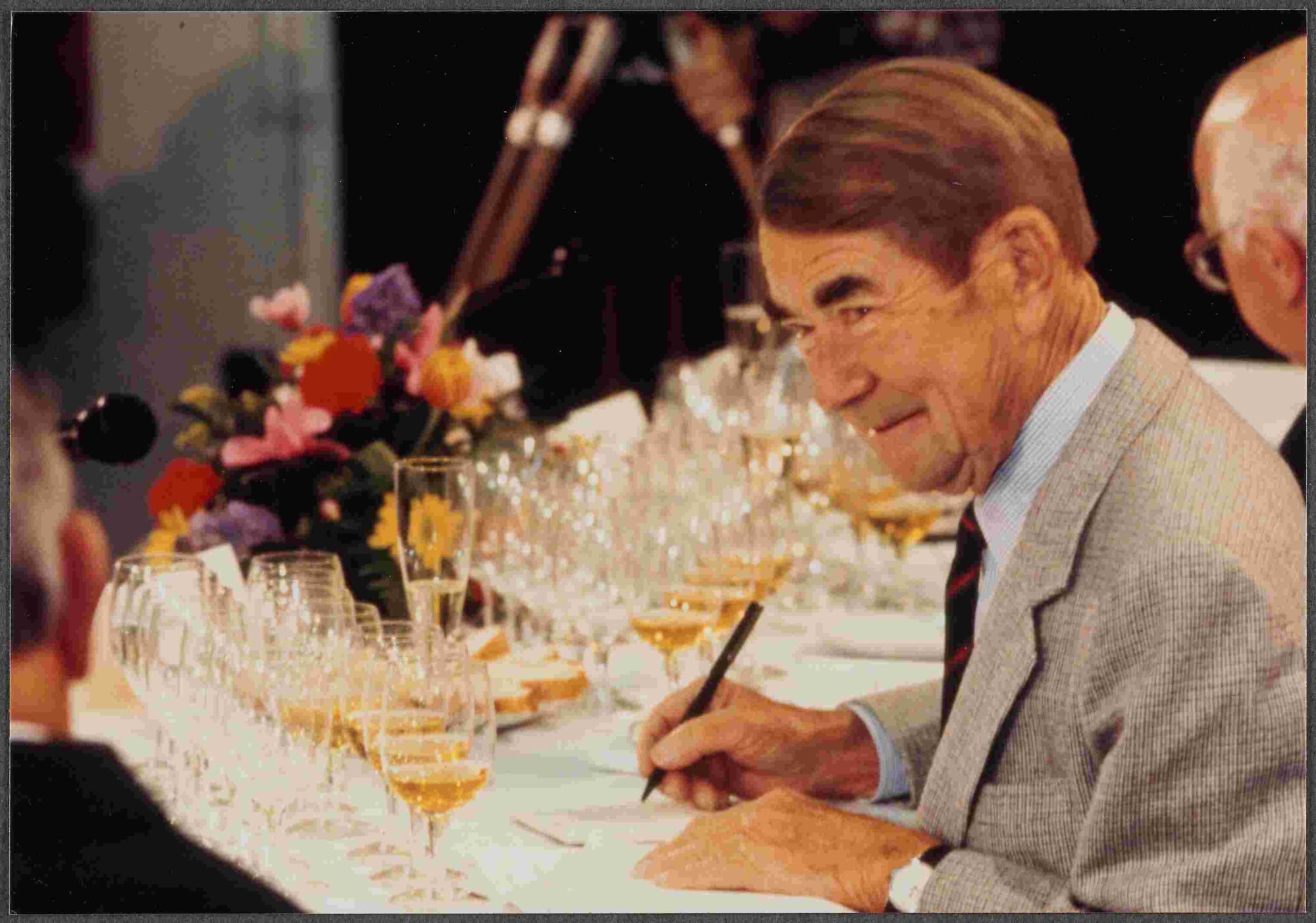
Tchelistcheff brought deep experience in French winemaking, having held positions in France’s national department of enology and viticulture. Tchelistcheff would become known as “the Maestro” for introducing scientifically-based winemaking methods at BV, promoting the study of viticulture, wine judging, and — close to his heart — mentoring fellow winemakers. Also celebrated as the “Winemaker’s Winemaker” and the “Dean of American Winemaking,” Tchelistcheff made an indelible mark on wine in Napa Valley and beyond.
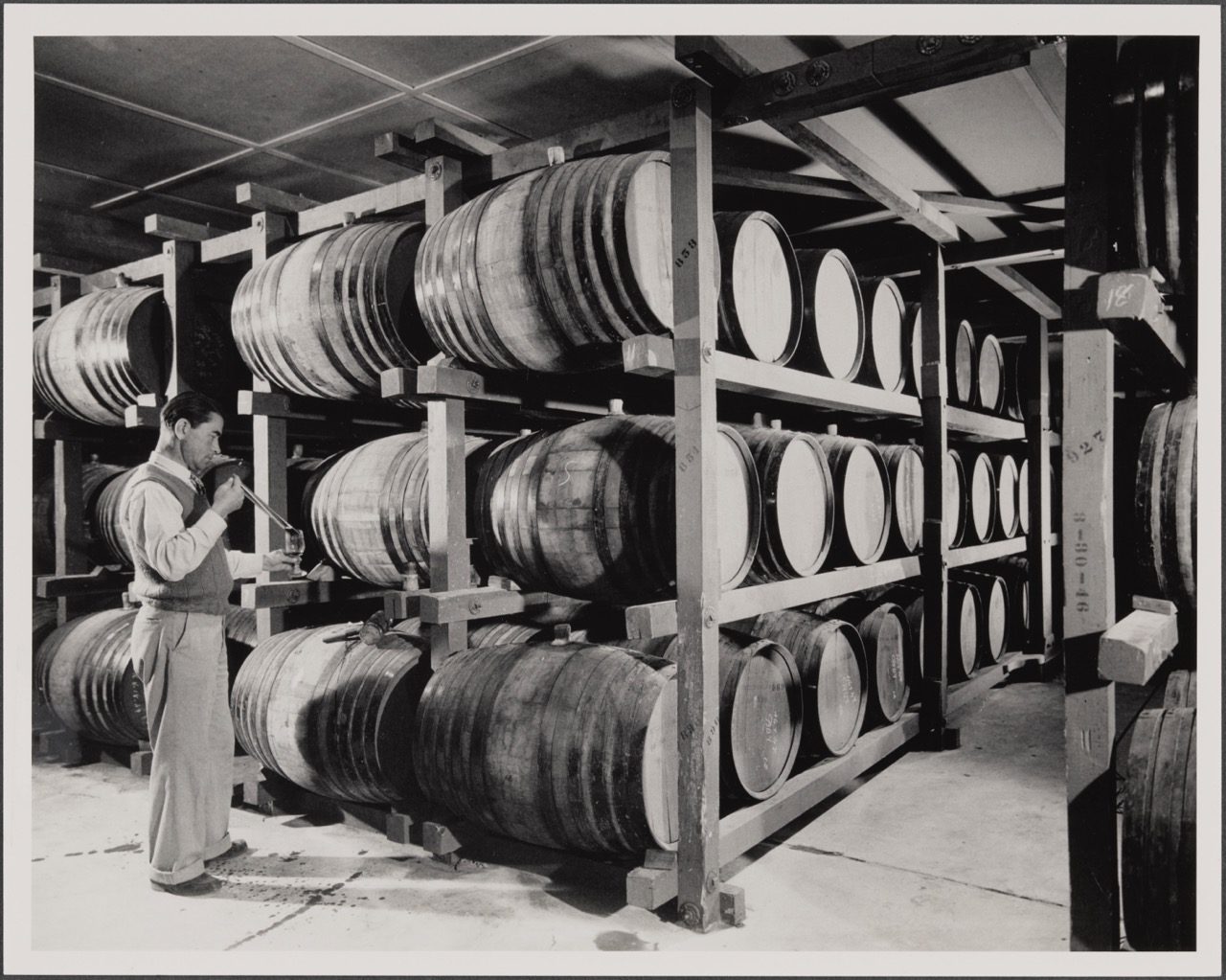
Winemakers use a “wine thief,” or long pipette to extract wine from barrels to “steal” or test the wine at different stages of fermentation.
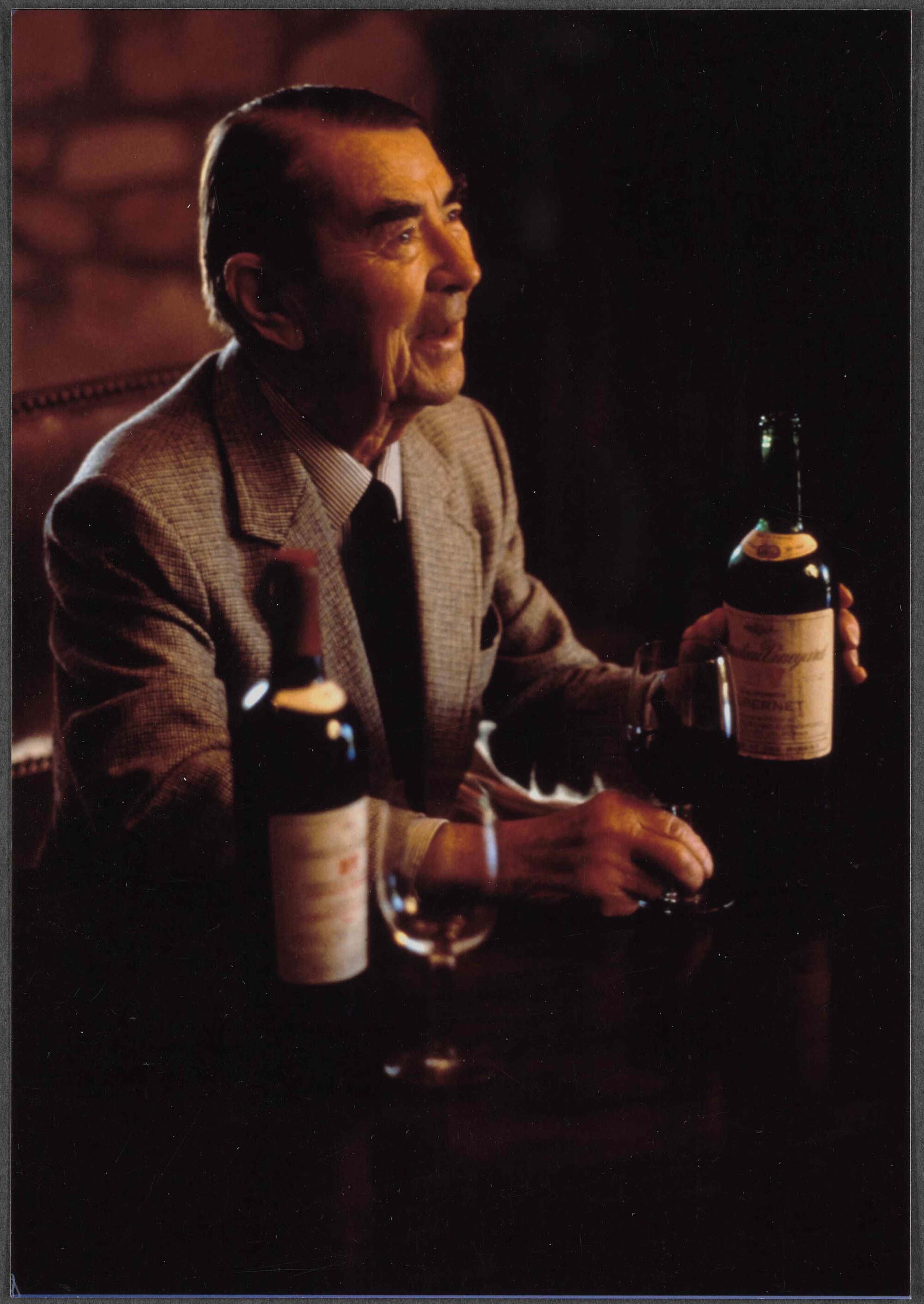
In the Hands of a Maestro
Under Tchelistcheff’s guidance, Beaulieu Vineyard 1936 Cabernet raised the bar for California cabernet wines for the next 40 years. Upon tasting it in 1938, Tchelistcheff immediately identified the 1936 vintage as exceptional and bottled it separately. The wine won a gold medal in the 1939 Golden Gate International Exhibition for best red wine.
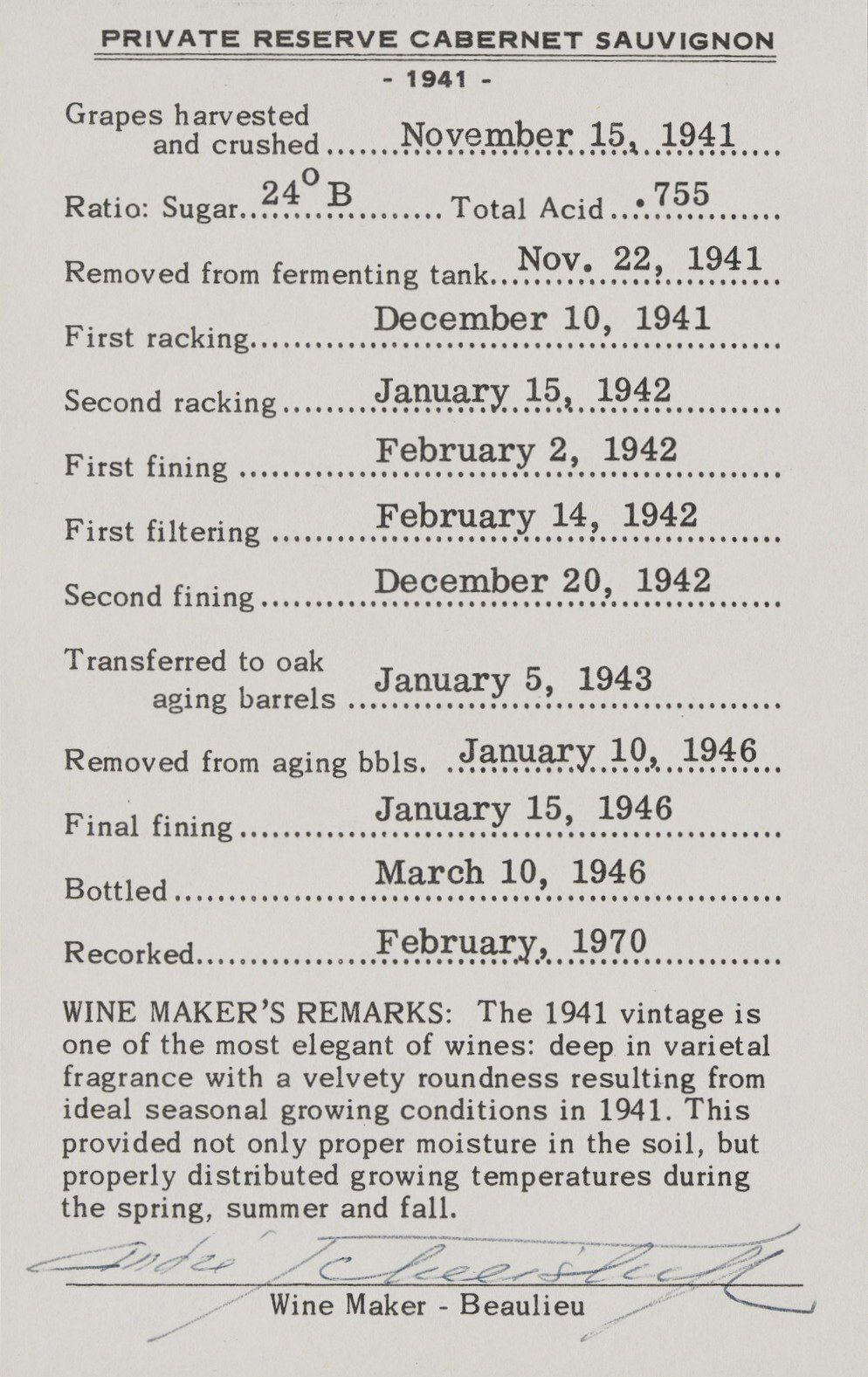
The winery released the Georges de Latour Private Reserve Cabernet Sauvignon in 1941, a year after Georges de Latour’s death. Georges de Latour Private Reserve set the standard for high quality cabernet sauvignon and became one of the most coveted wines in the world.
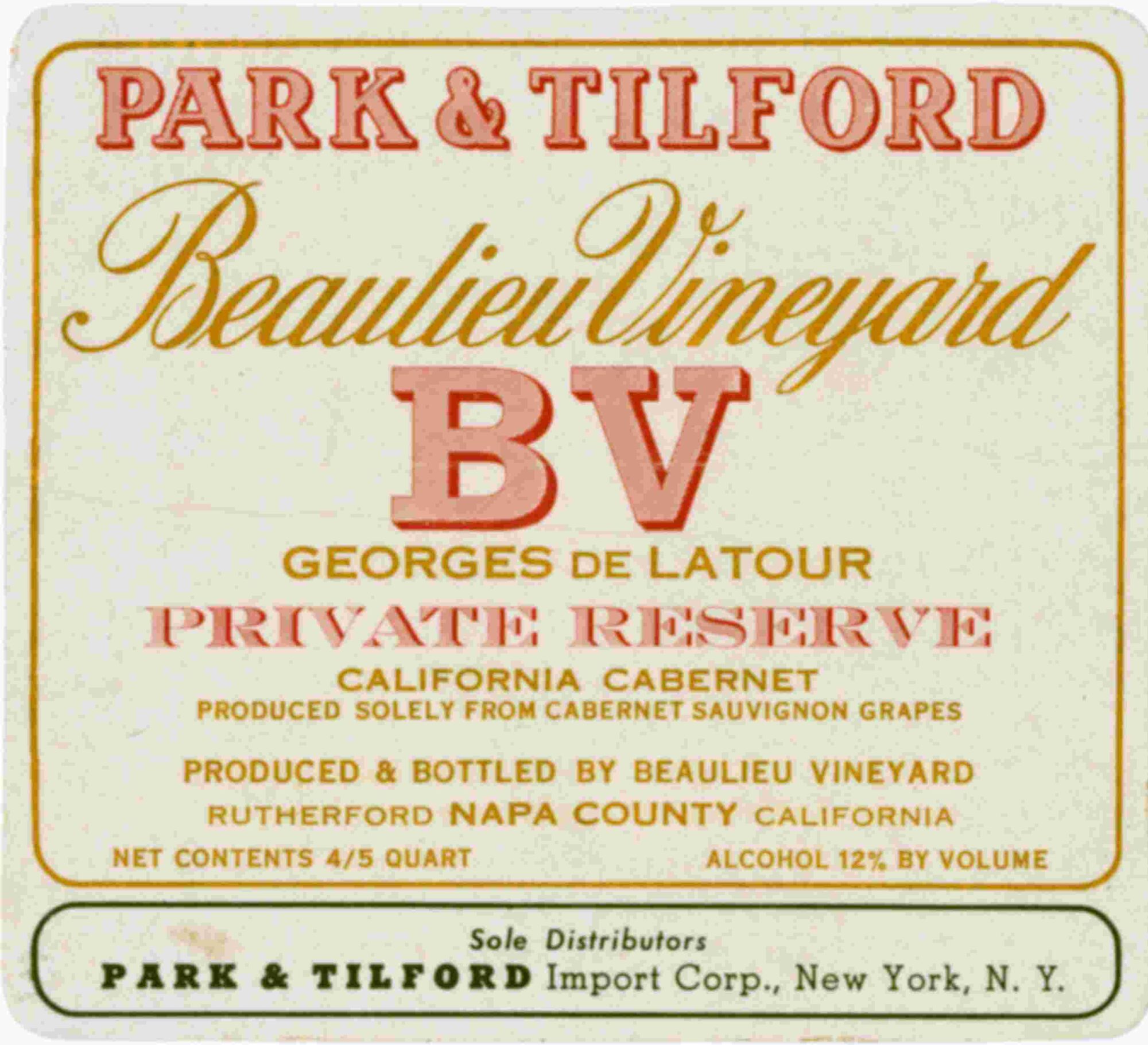
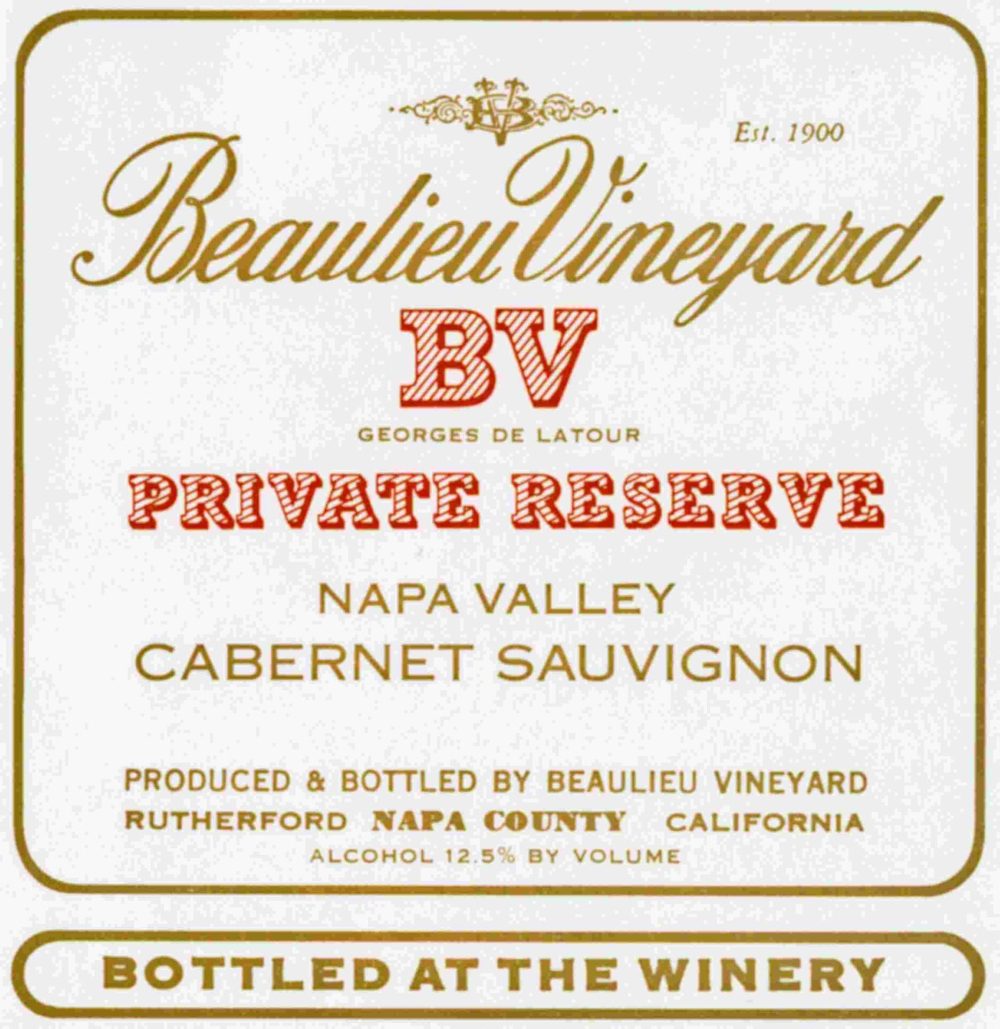
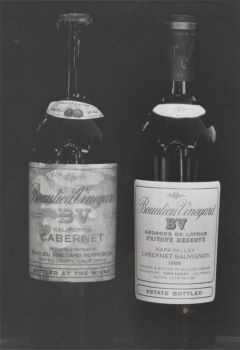
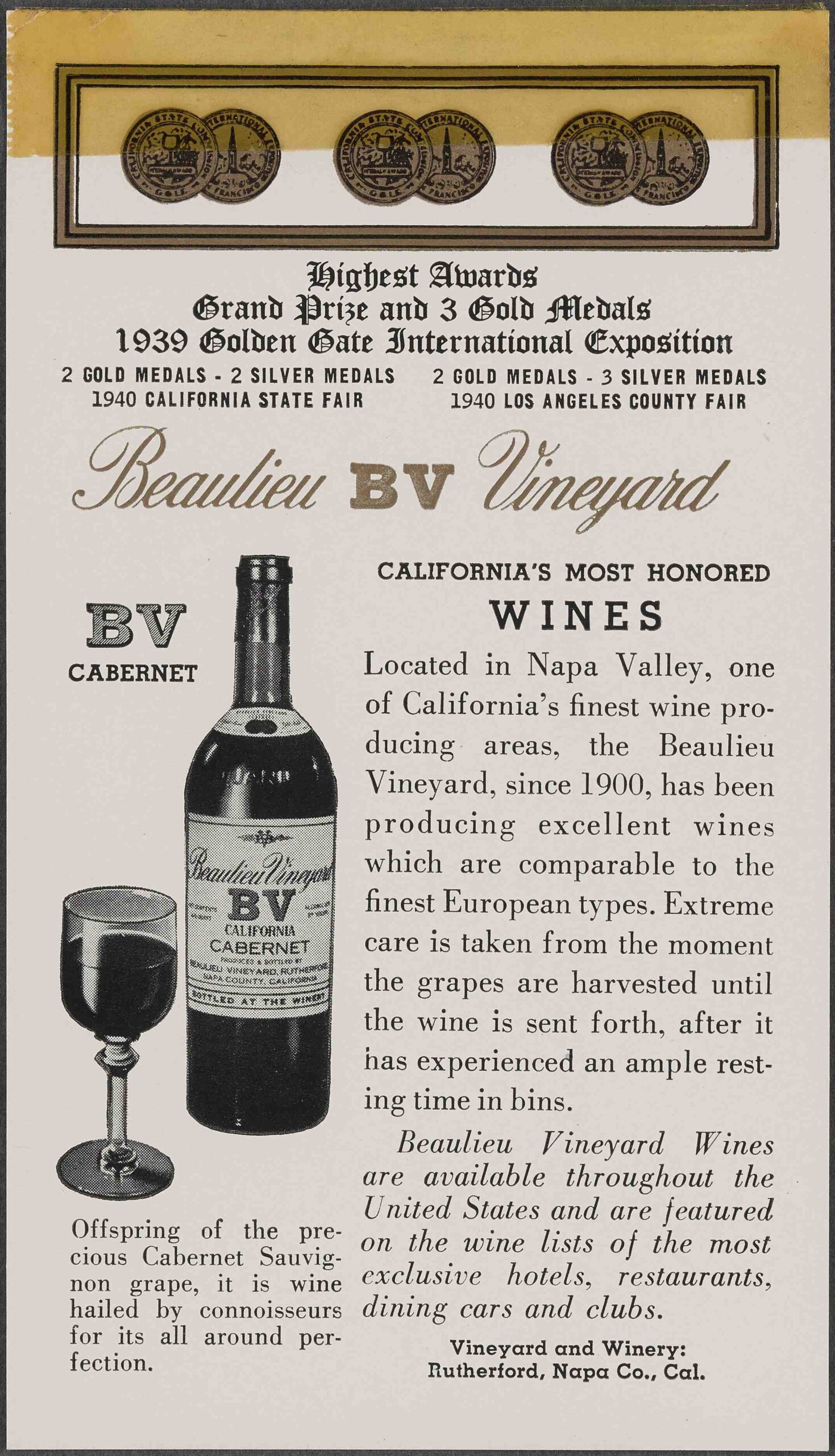
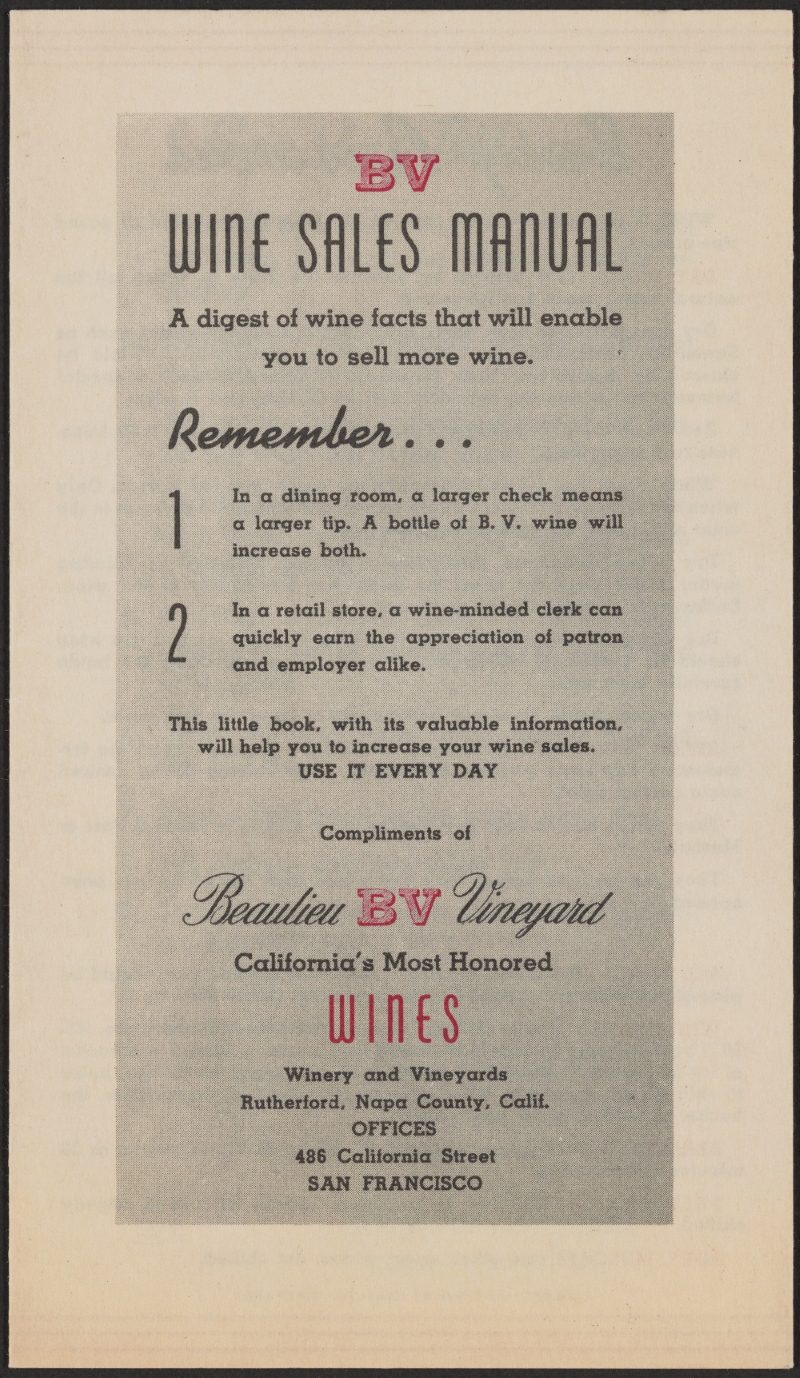
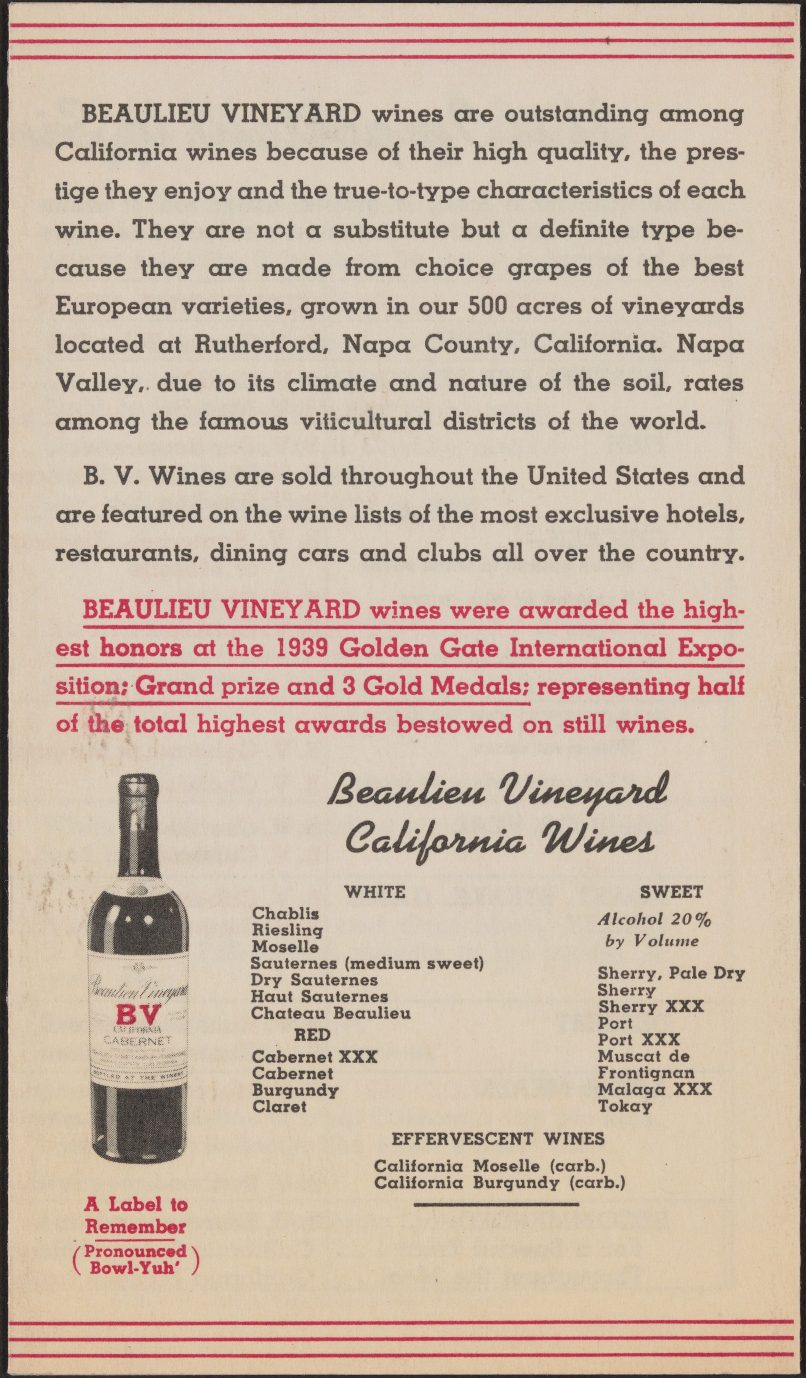
BV Wine Sales Manual, 1940.
After winning highest honors at the 1939 Golden Gate International Exposition, BV incorporated the recognition into its promotional materials — along with a phonetic pronunciation guide to the winery’s name: “A Label to Remember – Pronounced ‘Bowl-Yuh.’”