Prohibition and Altar Wines
Prior to Prohibition (1920-1933), Georges de Latour had acquired a permit to produce altar wine for sacramental use and supplied Catholic dioceses across the nation with altar wines. Because Prohibition allowed the production of sacramental wines, de Latour sustained BV’s wine production and sales during Prohibition.

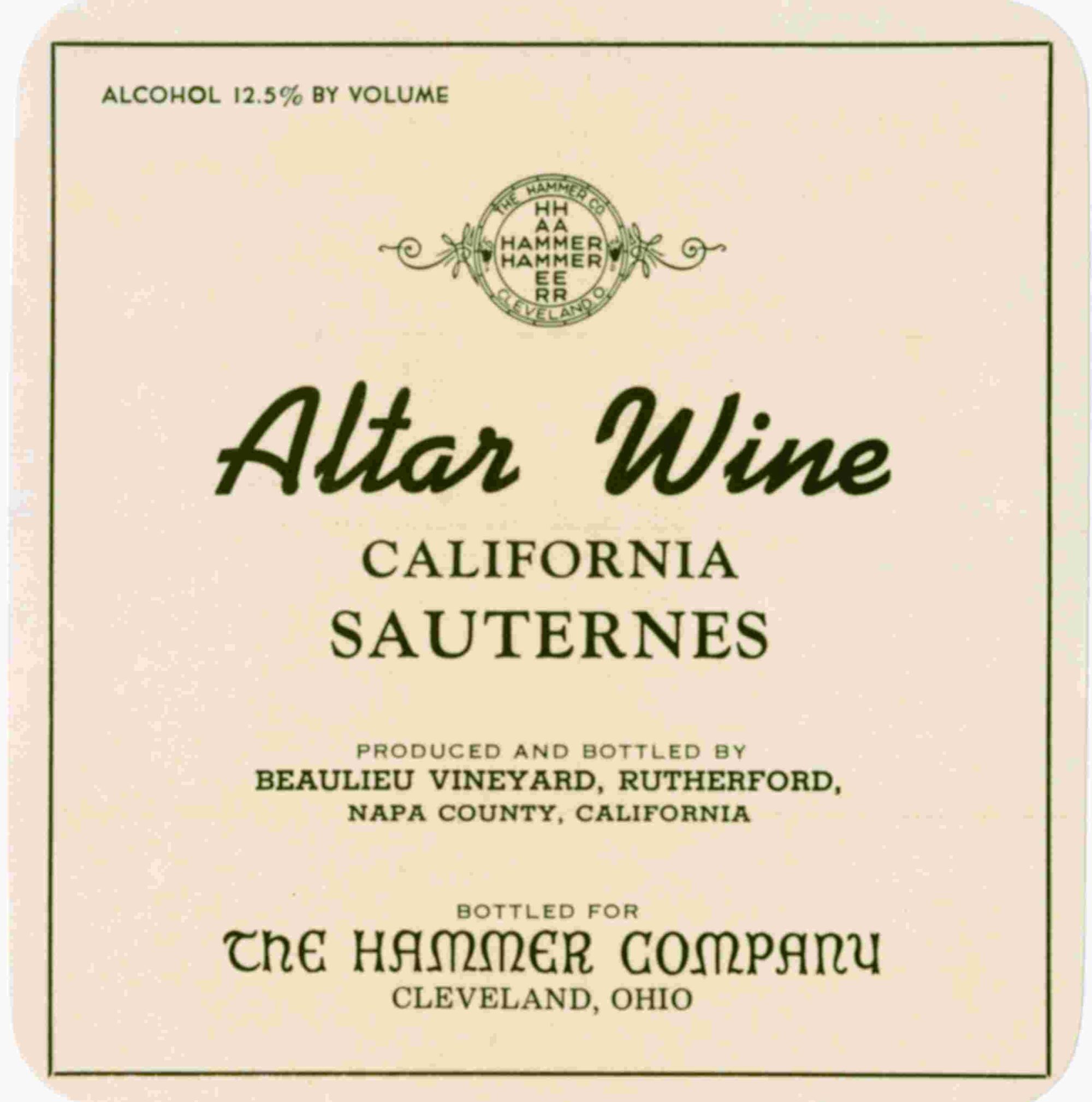
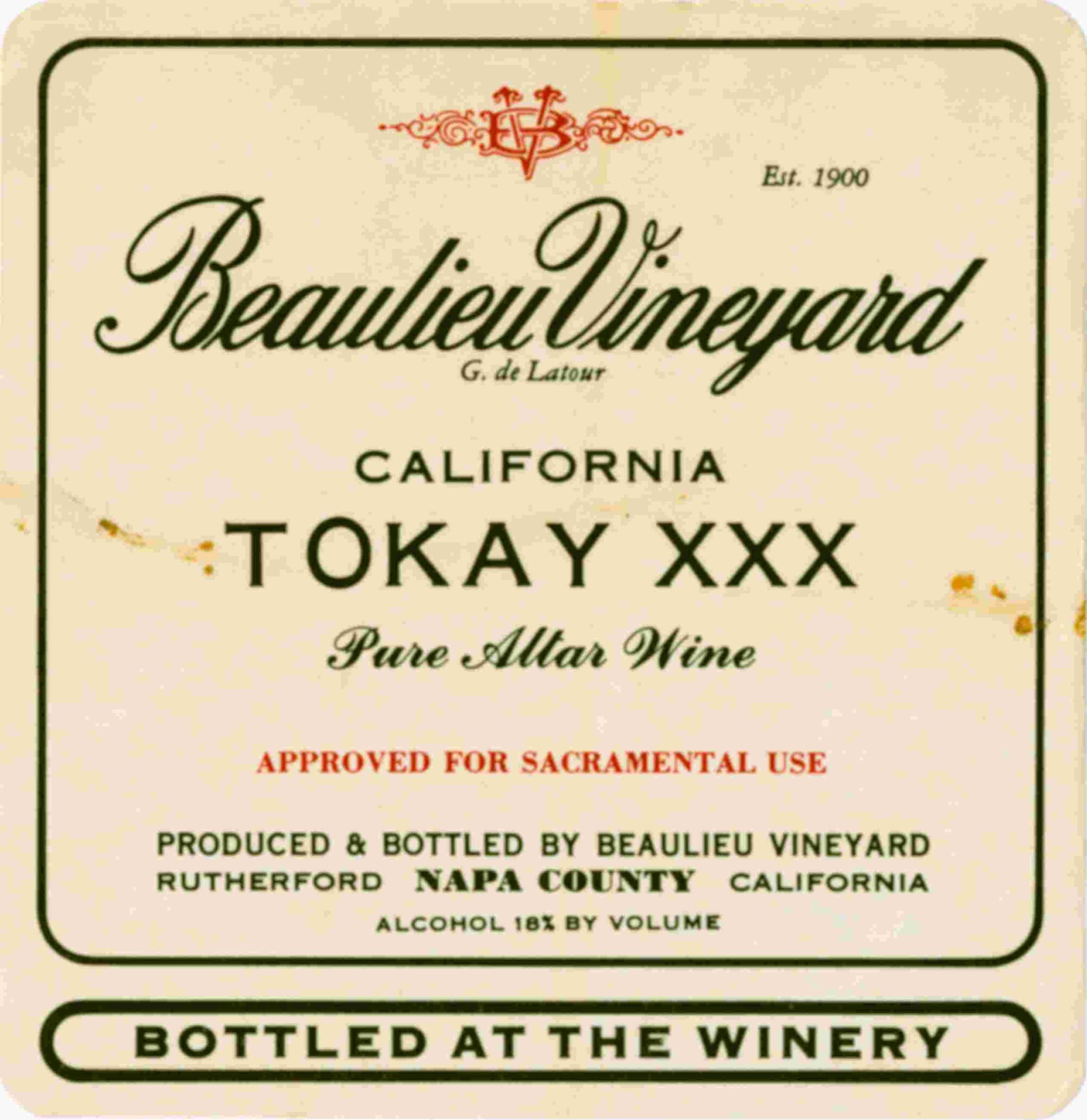
Wine labels for assorted altar wines, 1930s.
Sacramental wines produced by BV included Port, Tokay, and Sauternes.

This letter, from an importer-exporter company in Puerto Rico and written on the eve of Repeal, invited BV leadership to work with the distributor to sell BV wine on the Island as soon as Prohibition ended.
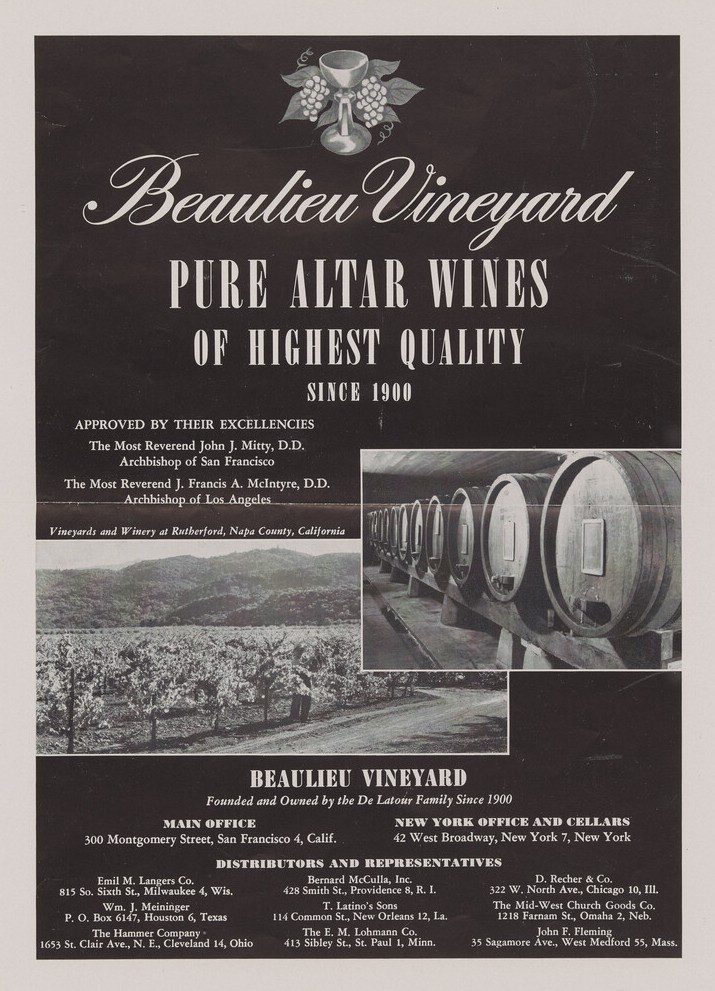
BV’s production of altar wines also continued over the decades that followed. This ad promotes that BV’s wines were “Approved by Their Excellencies,” the Archbishops of San Francisco and Los Angeles.
The ongoing production of altar wines helped BV sustain winery operations and quality, and emerge from Prohibition in full force. Between 1934 and 1940, BV surpassed all other California wineries in the number of medals earned in California competitions.

The front of each medal was embossed with the Great Seal of the State of California.
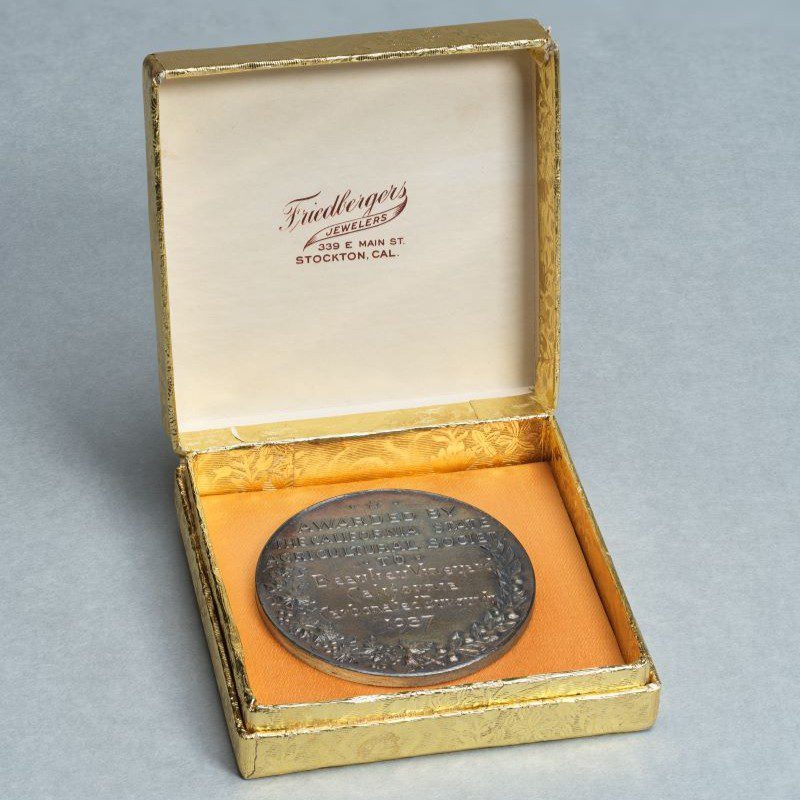
Awarded by the California State Agricultural Society to Beaulieu Vineyard.
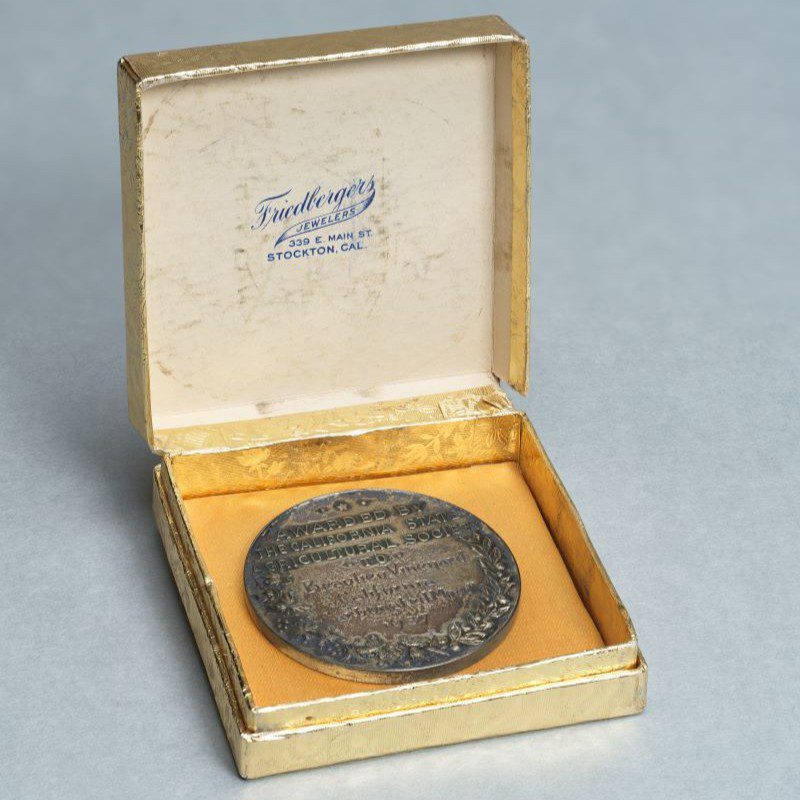
Awarded by the California State Agricultural Society to Beaulieu Vineyard.
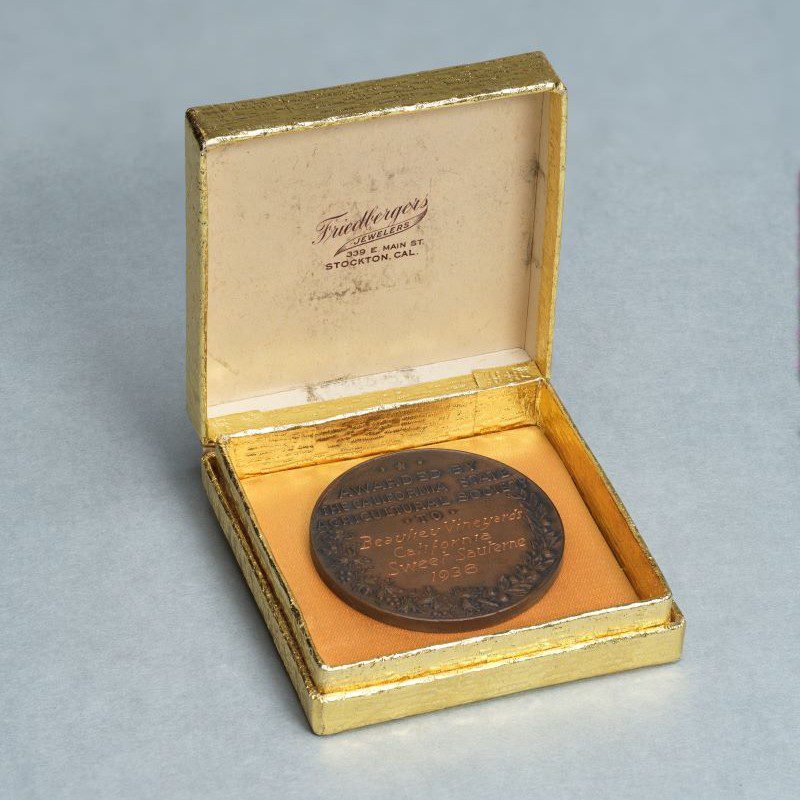
Awarded by the California State Agricultural Society to Beaulieu Vineyard.