The First Wave of Coffee
Contemporary American coffee culture and history is often categorized by three “waves” to describe the different periods of change and transition in the nation’s coffee roasting, brewing, and consumption patterns.
The “first wave” of coffee describes the period in the late 19th to mid-20th century that witnessed the rise of “commodity coffee.” Large companies popularized brands of coffee such as Arbuckle, Folgers, Maxwell House, Chase & Sanborn, and Hills Bros. Within the first two decades of the 20th century, American consumers shifted from home roasting and grinding to buying pre-packaged, brand-name coffee, which comprised 85 percent of coffee purchases.
By 1920, the United States imported more than half of the world’s coffee supply, even though the coffee beans’ origins were obscured in the coffee branding and advertising. However, 75 percent of the coffee at this time came from Brazil.
By 1940, 98 percent of U.S. households reported consuming coffee, a habit that was bolstered by Prohibition, which helped make coffee a more socially acceptable beverage in public settings.
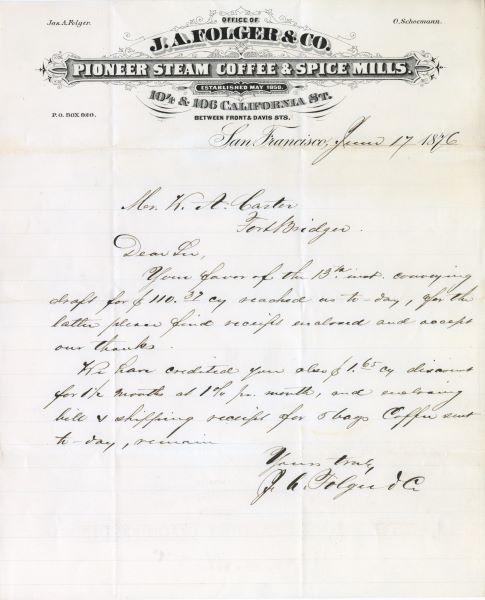
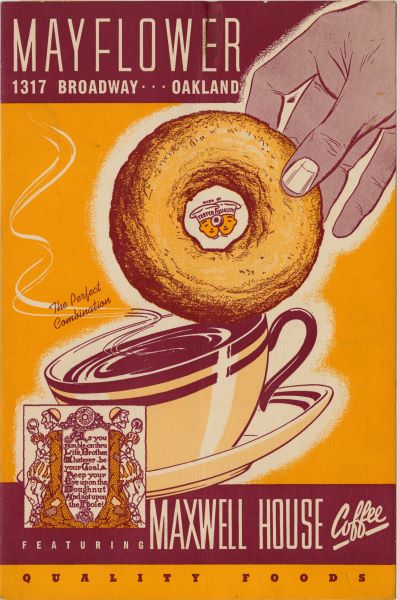
Menu Collection, D-678
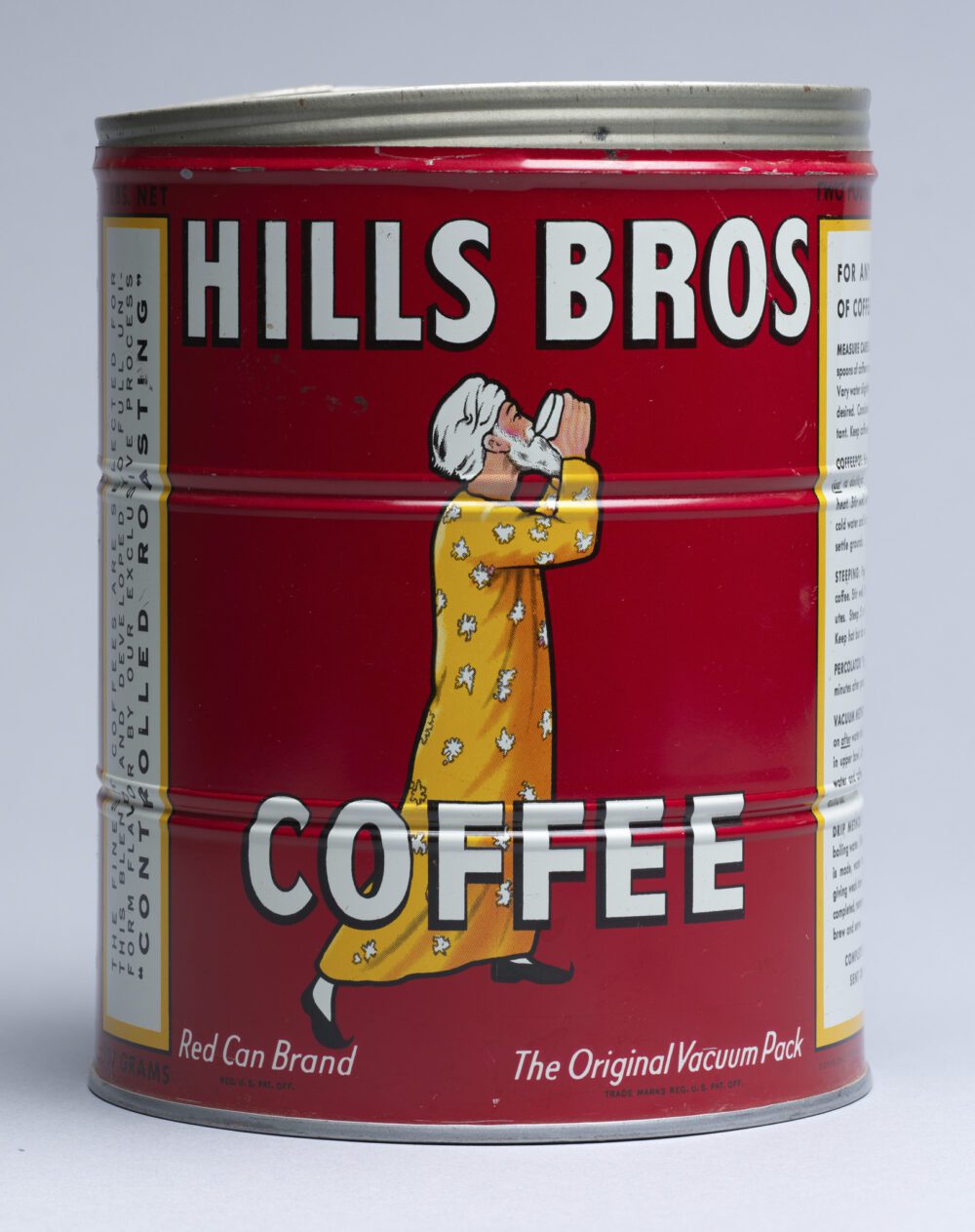
McKinnon and Ruble Families Papers, D-405
In the late 1870s, Caleb Chase and James Sanborn were the first to use sealed cans to package roasted coffee beans for their company, Chase & Sanborn. Hills Brothers, based in San Francisco, first offered vacuum-packed pre-ground coffee in 1900.