Cha Chat Episode 2.4: Tea Tables and Empire
Listen to the Episode
Join Dr. Erika Rappaport (UC Santa Barbara) and Bethany Qualls (UC Davis) as we discuss their research in a broad history of British culture, tea, gossip and gender.
Recorded: July 16, 2021 via Zoom
About the Episode
Introductions
Dr. Erika Rappaport, Professor of History, University of California, Santa Barbara
Started her relationship with tea while writing her book and has benefitted since writing the book with people sending her quality teas from all over the world. As Erika Rappaport was doing research on empire, tea became a natural area of study and became its own book.
Bethany Qualls, PhD candidate in English Literature at University of California, Davis
Bethany was always a tea drinker and enjoyed tea at Mariage Freres in Paris. In San Francisco, she had a roommate that was a professional chef and tea drinker with a tea pot and resteep tea. Bethany is still looking for a great travel set.
Erika discusses her journey into the archives of the British Library to discover a large collection that was about the British growing and selling of tea including journeys into the United States. In the 19th century tea was in decline in the United States and accounts suggested they didn’t know how to make tea. Tea was a great opportunity to explore “Britishness” from a global perspective and gender of tea.
Bethany explores gossip in the 18th century and how it functions in England. She did research at the Lewis Walpole Library at Yale University. She dug into the large engravings and looked for anything tagged “gossip” and “tea table” because they go hand in hand. She is thinking of print culture as not just words, but engravings and other published content. She was starting one chapter that evolved into four chapters looking at the coffee house, the tea table, the brothel and the pall mall. Bethany said it is shocking how much of British literature centers around tea as a cultural signifier of British empire.
Erika asked Bethany how she examines tea tables, as a physical item or more symbolic. Bethany said the tea table is a metonym for gossip, but it is heterogenous, but women are in charge of the tea table. Men and women are at the tea table.
“gossip and news are basically the same thing, but who has the power there?”
— Bethany Qualls
Bethany went on to describe tea tables having legs attached to them to increase the height. Erika liked Bethany’s linkage of gossip and news. Erika mentioned the idea of tea table and gossip and mentioned a South African Paper in the 1930s that centered around the tea table discussing gossip and selling Western commodities. Bethany went on to say that the tea table was the place to sell print, as well, to give tea tables “something to talk about”.
Erika said tea suffered from anti-British sentiment in the 19th century and was associated with the feminine. This image hurt tea’s reputation despite marketing attempts to the contrary.
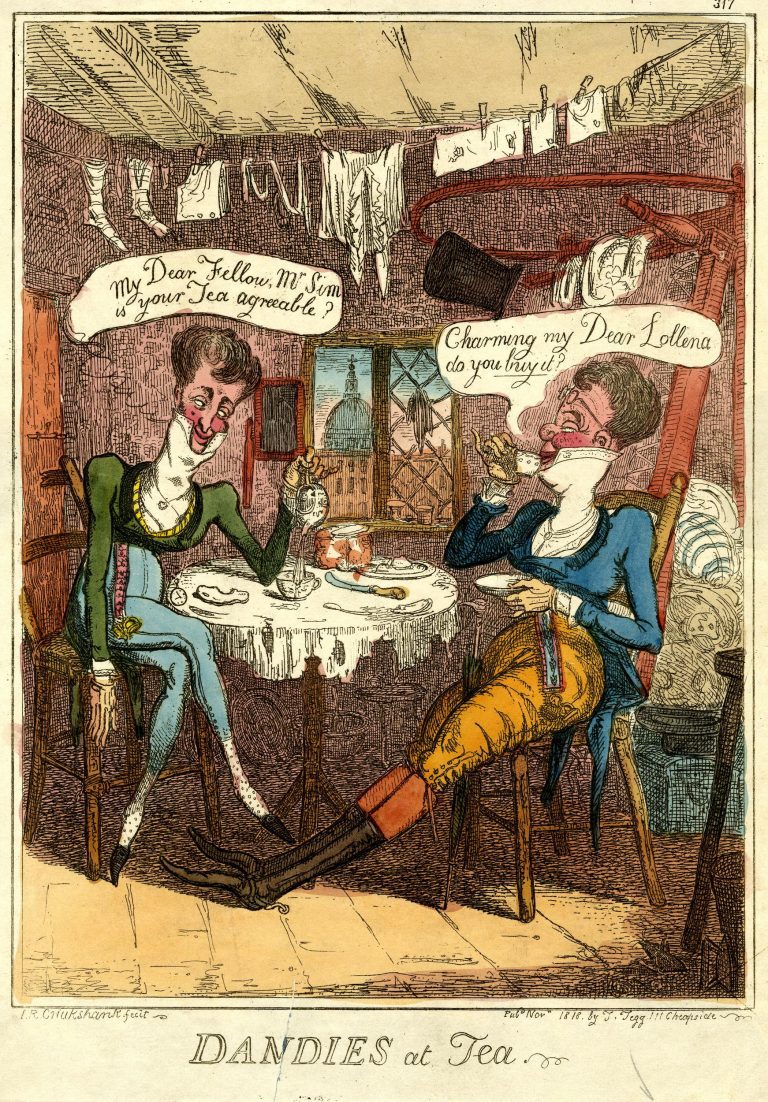
“They did hit on a strategy which was to invent iced tea. Take it out of the tea pot and away from the tea table … and remove the material culture that represented Britain.”
Erik asked what defines a tea table? It is a tray that comes on top of another table or may just be a table on its own. Furniture makers would add longer legs to tea tables because they were meant to be consumed closer to the ground. Erika mentioned they were always smaller and getting knocked over. Erika and Bethany discussed the knocking over of tea tables to represent upheaval like difficulties in marriage. The tea table is this embodiment of stability and “culture” that upheaval is embodied by the tables being knocked over.
A gallery of tea tables
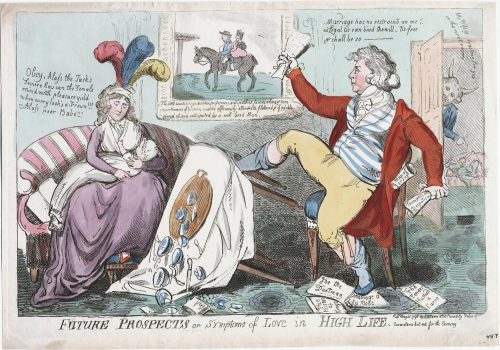
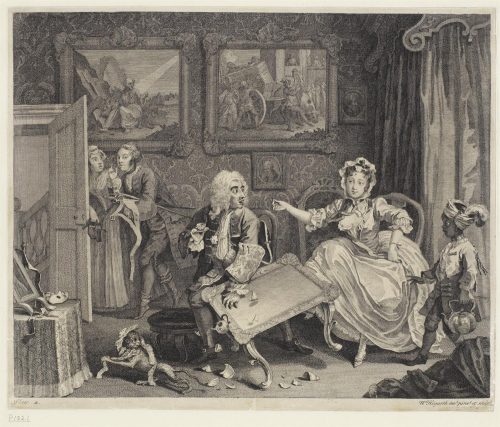
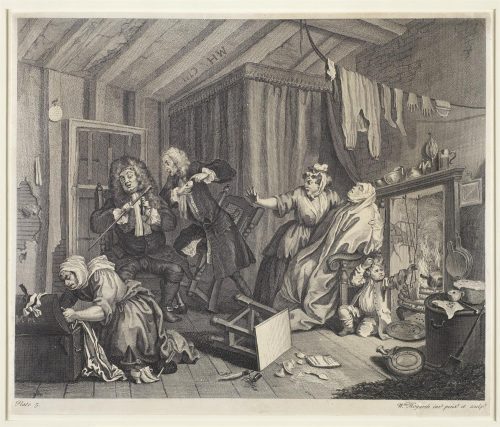
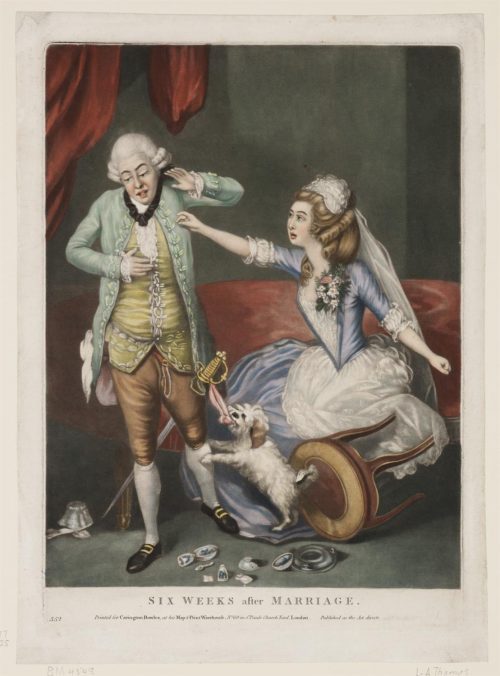
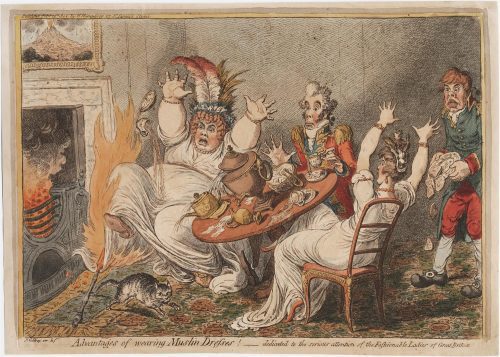
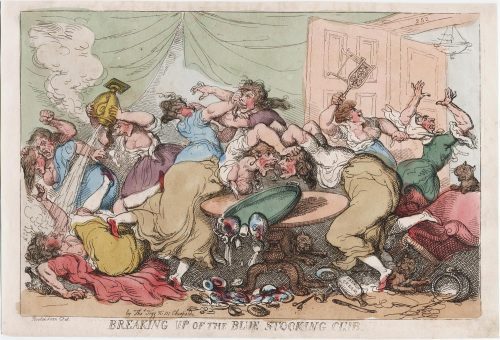
Bethany helped dispel the myth of spilling tea is not about tea but telling the truth and originates with the book Midnight in the Garden of Good and Evil in 1994. Erika mentioned that tea has gone down significantly since the 1950s but Erika said that tea declines with changes in societal affluence and generational rebellion.
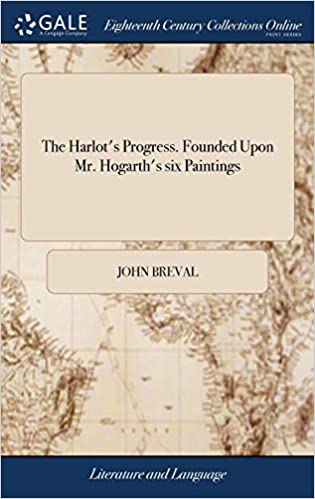
Check out this video describing an 18th century engraving with tea tables, narrated by Bethany Qualls:
VIDEO EMBED MISSING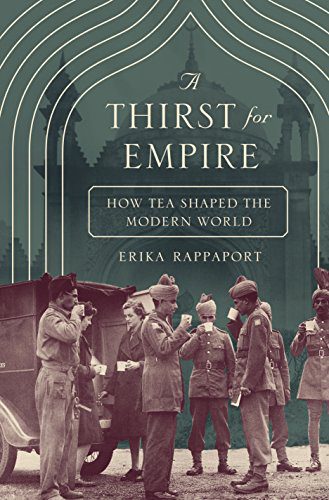
A thirst for empire: how tea shaped the modern world (2017)
Author: ED Rappaport
Call Number: Shields Lib GT2905.R26 2017
Cha Chat is dedicated to the Global Tea Initiative
The Global Tea Institute (GTI) promotes evidence-based knowledge about tea. It is a singular global phenomenon, a neutral place for multidisciplinary tea scholarship.