Cha Chat Episode 2.1: Opportuniteas!
Listen to the Episode
Explore opportunities in the tea industry as we discuss recent UC Davis graduate, Matthew Maekawa’s internship at QTrade Teas. Joining us is Matthew’s employer and CEO of QTrade Teas, Manjiv Jayakumar.
Recorded: July 8, 2020 via Zoom
About the Episode
Matthew Maekawa graduated recently with a food sciences degree. He learned about tea during his internship at QTrade Teas and found the delightful complexities of tea.
Manjiv Jayakumar is the chief executive of QTrade Teas which was started by his father. Tea was a large part of his life and grew up with tea in Sri Lanka.
Matthew found this opportunity by “accident”, but matched the direction he wanted to go in. He liked food and he likes science. His coursework included biology, chemistry and even physics.
Matthew had the opportunity to do two internships at QTrade in Winter and Summer. He looked at the density and cutting sizes of teas. There are “thousands and thousands of different kinds of teas”.
Cutting size effects extraction of tea and how much goes into a satchet.
Manjiv introduces QTrade tea which provides services to other specialty tea brands. They are a support for other tea companies, that primarily involves Camellia sinensis (tea). They focus on blending and packaging of tea in satchets. Their internship programs started at Chapman University about six years ago and many students wanted to continue their research. Global Tea Initiative was another point of access to these students, particularly the student tea club.
“Interns are a source of energy and enthusiasm and secondly, potentially, a source of employees”
– Manjiv Jayakumar
Matthew is currently working with QTrade.
When asked how he would do it better, he said do internships sooner in his undergraduate career. He would have focused and built more on chemistry and he definitely kept his old notes.
Manjiv seeing the path of tea opportunities,
“we are very optimistic about the future of the tea industry”. How tea is consumed and experienced is changing a lot. Boba tea is an example of a trend that leads to a mainstream venue.
Manjiv sees primarily four paths of opportunity in tea:
Research and Development (R & D) –
“A Food Science background really helps as you become an “architect of a product”
This product centers around sensory experience but includes other aspects of marketing including safety and sustainability.
Quality – focused on food safety and regulatory compliance.
Purchasing – Becoming a purchaser or tea-buyer. Q-trade has someone with 30-35 years of experience. He spent some of that time in Yunnan having close to 1200 cups of tea a day. You have to match sensory to market conditions. It is almost an apprenticeship process.
Operational – Centered around the production and process of tea.
Matt’s favorite part is formulating new products. Trying to get the best product out there.
Manjiv says innovation has been occurring over the last 10-15 years, particularly in packaging and blending. Marketing of tea has also become different, like appreciation of L-theanine (found in tea) and isolating it as a supplement.
We discussed how the tea market has changed. Fewer but well-funded companies are emerging in the tea industry raising the bar of success.
Matthew closes with this advice: in an internship, if you are given a task, understand more about what is behind it. Keeping a good connection with the companies you are working with or have worked with is also very important.
Manjiv said everyone has a special spot for interns and if the intern has demonstrated enthusiasm and dependability, they will get more and more potential work or opportunities.
Find out more about QTrade Teas!
Watch a video on the “day in the life of a tea intern”:
VIDEO EMBED MISSING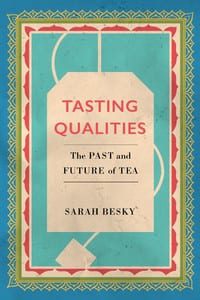
Tasting Qualities: The past and Future of Tea. (2020)
Author: S Besky
International Conference on Food Science Technology (1999)
Author: JR Whitaker
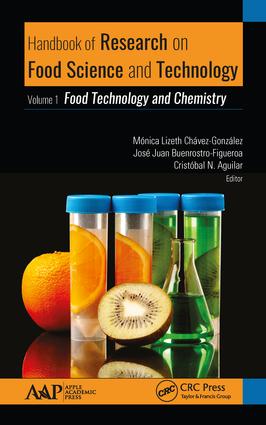
Handbook of Research on Food Science and Technology. Volume 1, Food Technology and Chemistry (2018)
Chapter 8
Author: M Chavez-Gonzalez, C Aguilar & JJ Buenrostro-Figueroa.
Tea Blending as a Fine Art (1896)
Author: JM Walsh
Call number: Shields Special Collections
Noling Collection
SB271 .W23 1896b

Food Chemistry (2009)
Coffee, Tea, Cocoa
Author: H Belitz. W. Grosch & P. Schiebierle
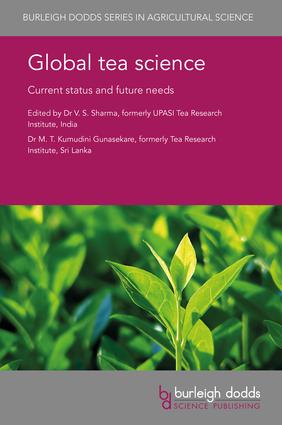
Global Tea Science (2018)
Author: VS Sharma & K Gunasekare
Call number:
Cha Chat is dedicated to the Global Tea Initiative
The Global Tea Institute (GTI) promotes evidence-based knowledge about tea. It is a singular global phenomenon, a neutral place for multidisciplinary tea scholarship.