Skip to main content My Account Off-Campus Access Give Meet with a Librarian Directory Library Services Technical Support Submit a Digital Sign Give Newsletters Social Media

Worlds Encompassed: Premodern Making and Mingling

Welcome to the wonders of the premodern world where you might encounter a lamia, be tempted by a devil, trade spices along the silk road, sample chocolate, witness the banners of a terrible battle, or encounter a beneficent deity. This exhibition presents the marvels and the mundane of life in far flung empires and worlds of a time long ago. Linger over rare illustrations and texts both strange and familiar to find the threads of connection that tie the past to the present.

This exhibition showcases premodern manuscripts and imprints from the Archives and Special Collections in the UC Davis Shields library, supplemented by student works from the Medieval and Early Modern Studies (MEMS) program. Through a selection of rare books and materials curated from a global perspective, the exhibit enables viewers to envision the lived worlds of human experience in dynamic interconnection, uncovering not a single “world” but rather varied and often interlocking processes of world-making by which people in different locales and cultures experienced, understood, and shaped their places in relation to their global contexts. It guides viewers through five modes, in six exhibition cases, by which premodern worlds have been experienced:

  • Objects in circulation
  • Peoples and other beings in representation
  • Cartographical thinking
  • The rise of vernacular languages and literatures
  • The workings of technology.

Although the physical exhibit has ended, you can view the online exhibit:

View the Online Exhibit

Co-curated by Yuming He, Tiffany Werth, and Mikhaila Redovian with support from David Gundry

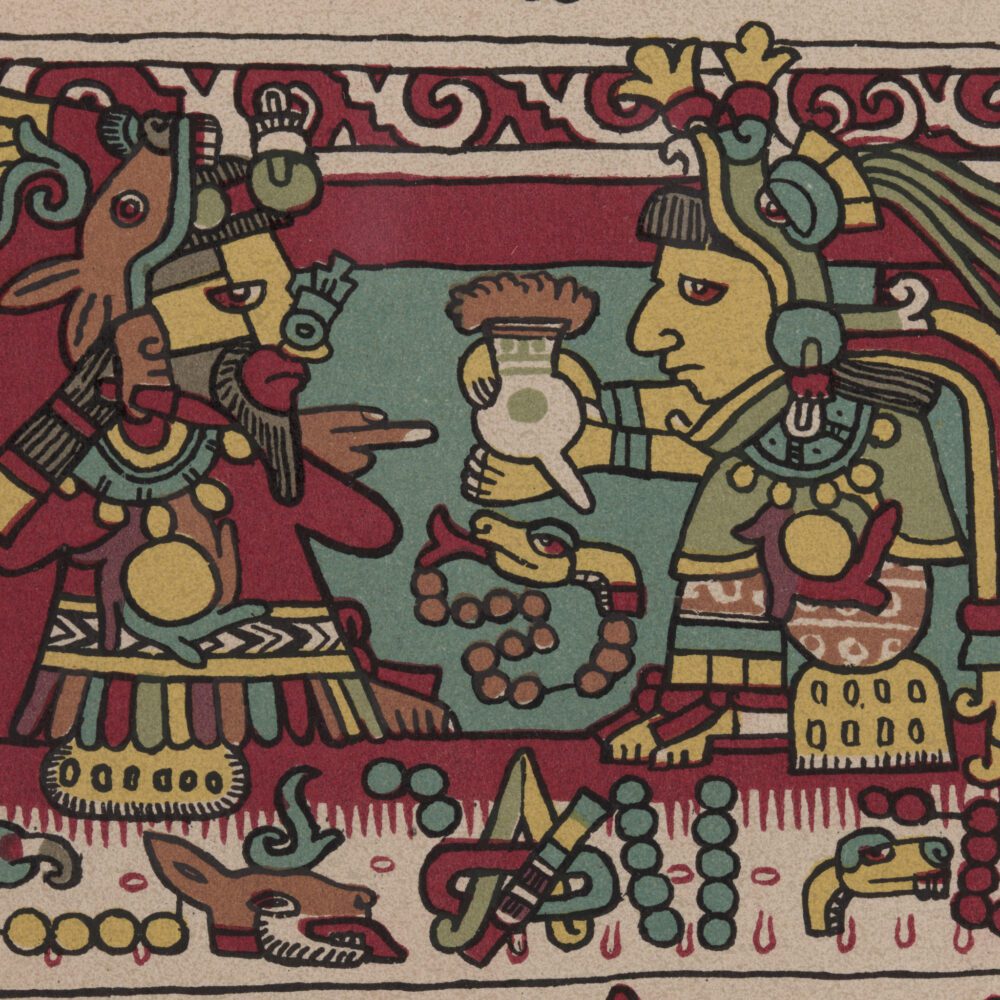
A pictorial representation of a marriage ceremony featured in a page from the Codex Nuttall. The pictogram shows a bride presenting her groom with a vessel of chocolate.
Codex Nuttall; facsimile of an ancient Mexican codex belonging to Lord Zouche of Harynworth, from “objects in circulation.”
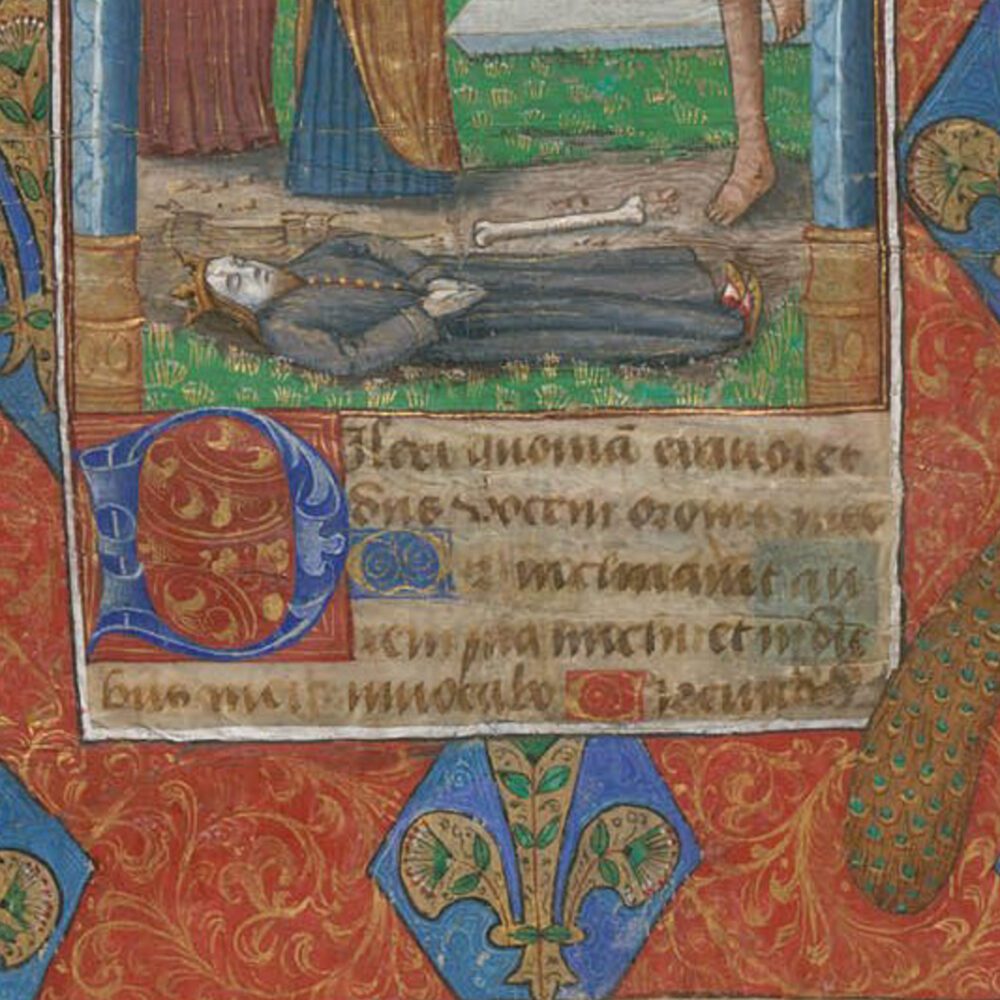
Miniature for the Office of the Dead from a book of hours. The miniature features an illustration of a crowned figure lying on the ground. The miniature is surrounded with patterned borders, handwritten Latin text, and ornamental floral motifs in red, blue, and gold.
Hours of the Virgin, in Latin, preceded by a Calendar in French, and followed by the Pentential Psalms and Litany, the Office of the Dead, and prayers to the Virgin and memorials for Saints, in Latin, before 1497, from “peoples and other beings in representation.”
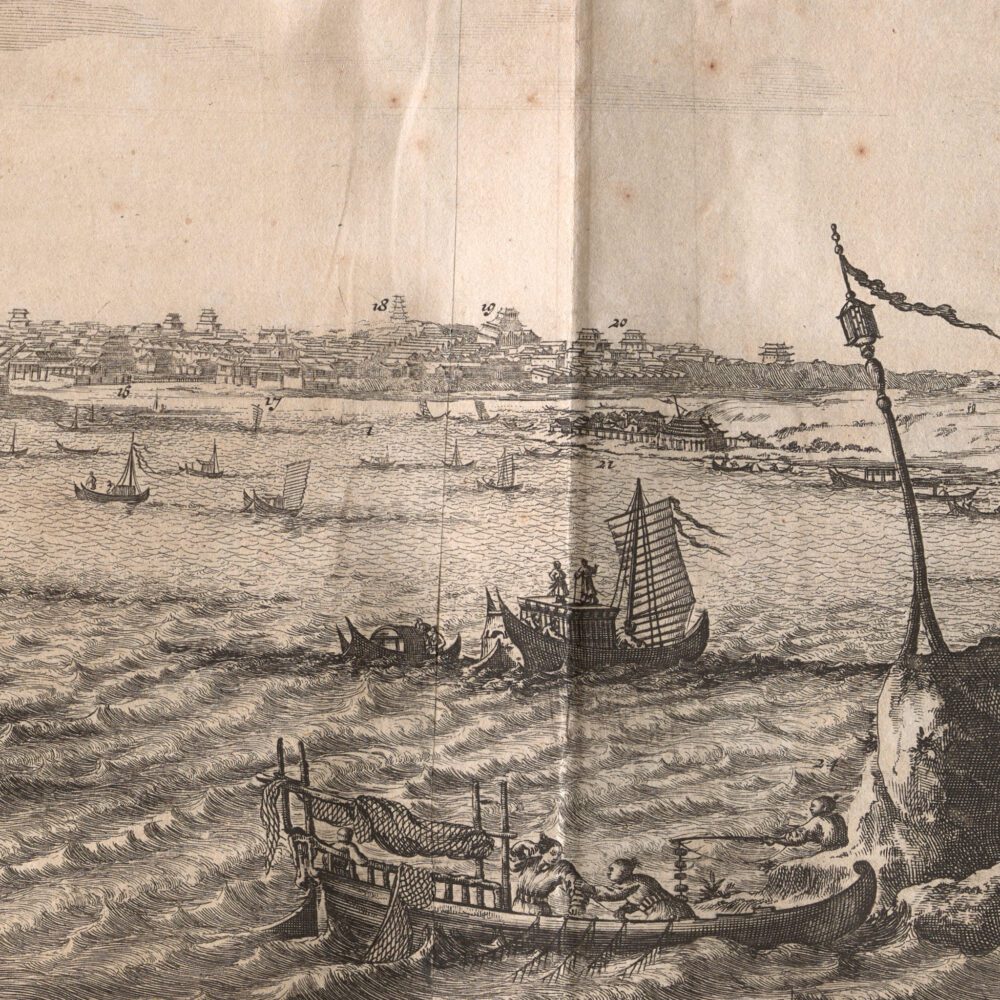
"The City of Osacco" from Atlas Japanensis by Arnoldus Montanus and John Ogilby (1670). This map of “Osacca” demonstrates the frequently contentious relationships between peoples as they played out on the seas.
Atlas Japannensis: Embassy to Japan, from “cartographical thinking.”
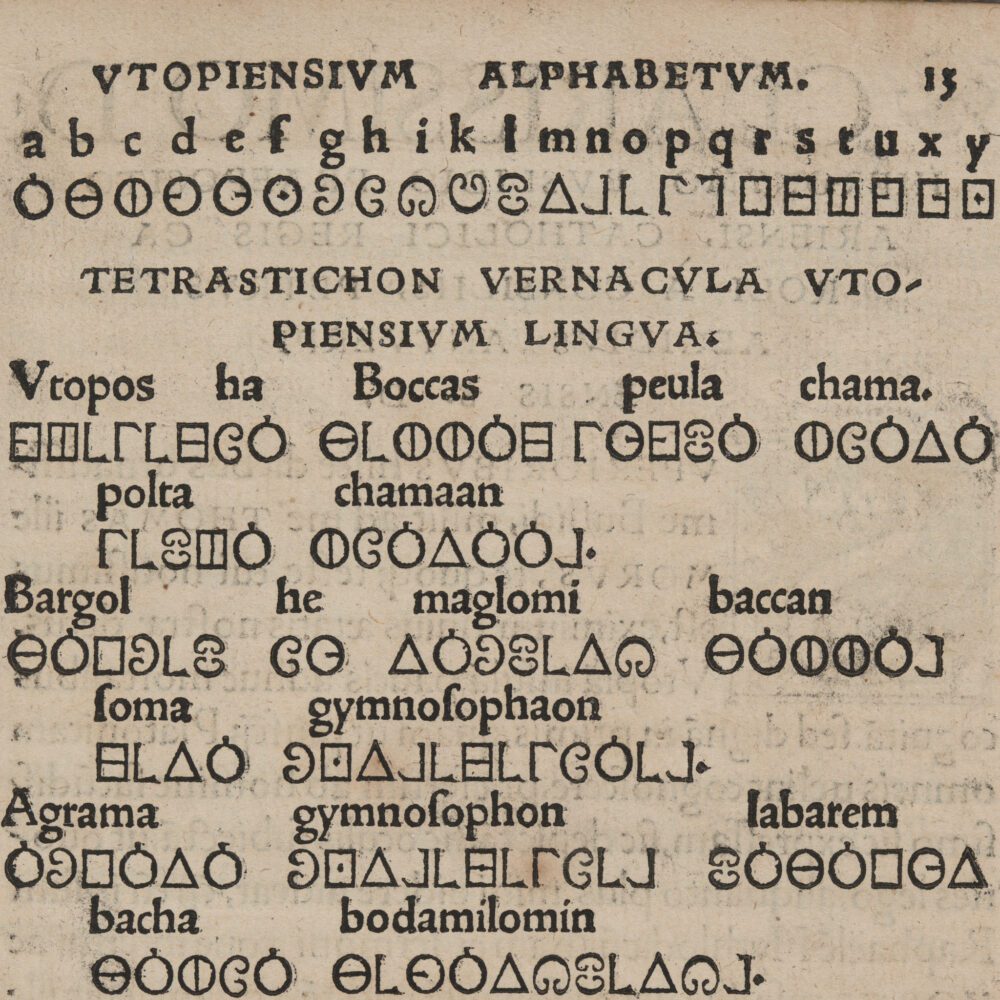
A small sample of a created language from Thomas More’s Utopia. It is unclear whether the language is representative of earnest or satirical sentiment. Utopia was originally composed in Latin, and the idealized Utopian language shares more similarities with that language than with English.
More’s Utopia, from “the rise of vernacular languages and literatures.”
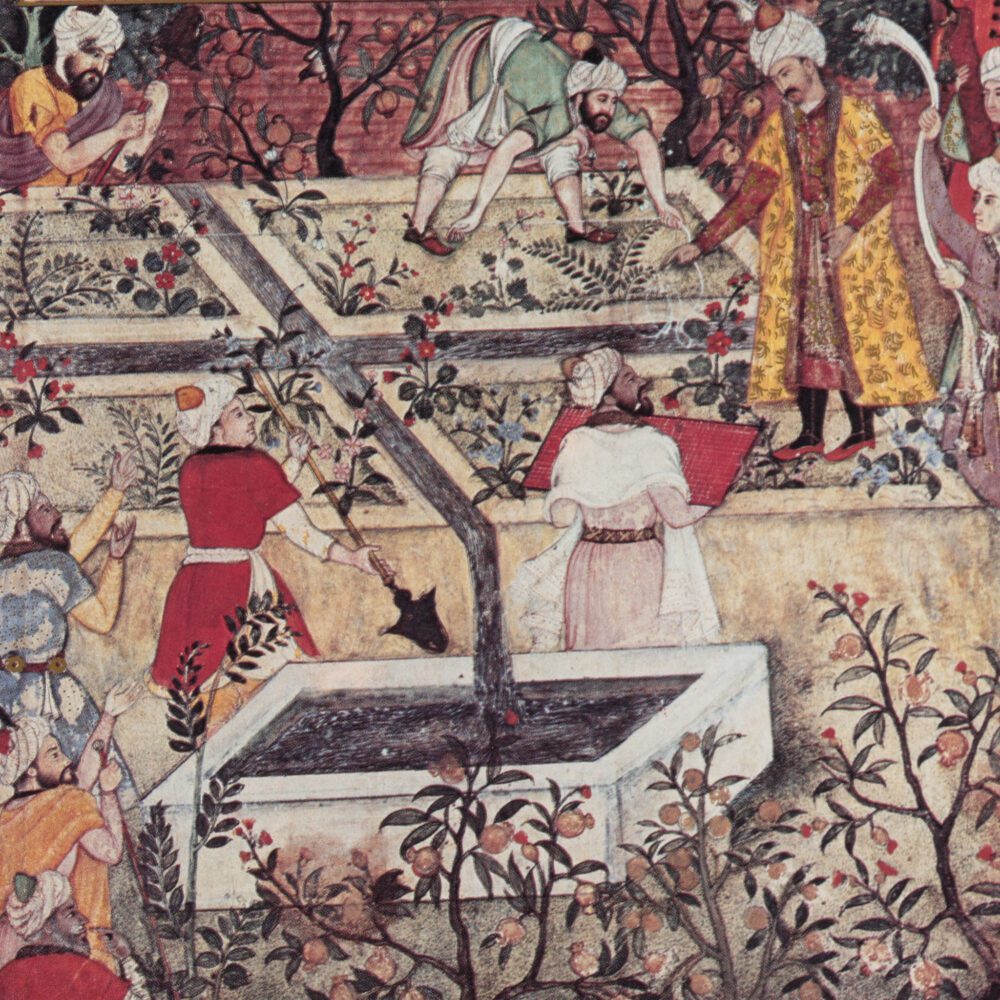
Miniature titled “Barbur and the Garden of Fidelity” shows an elaborate leisure space. Barbur, a Mughal emperor, here oversees the creation of a traditional Iranian four-part garden or chahar bagh at his palace in Kabul. Workers are seen arranging the garden appropriately. This design mirrors the four rivers and gardens of Paradise as described in the Quran. This miniature comes from The Art of Healing and Health Care in India: Twelve Miniatures.
The art of healing and health care in India: twelve miniatures, from “the workings of technology.”
This image features the Chinese emperor of the Qing dynasty (1644–1911), Kangxi (r. 1661–1722), on his throne from the Atlas Chinensis by Arnoldus Montanus and John Ogilby (1671).