Making A World Of Difference
Stories About Global Health
Blaisdell Medical Library (BML) is proud to host Making a World of Difference: Stories about Global Health, a traveling exhibit from the National Library of Medicine (NLM).
Global health seeks to improve access to medical care by addressing health information needs and reducing medical discrimination. In a world often divided, the desire for health can bridge the gaps between peoples and nations. Taking an expansive view of health and medicine, folks from the health sciences, social sciences and beyond work together to prevent and fight the spread of disease and provide assistance and relief to vulnerable populations in countries affected by war, natural disasters and general lack of access to medical care.
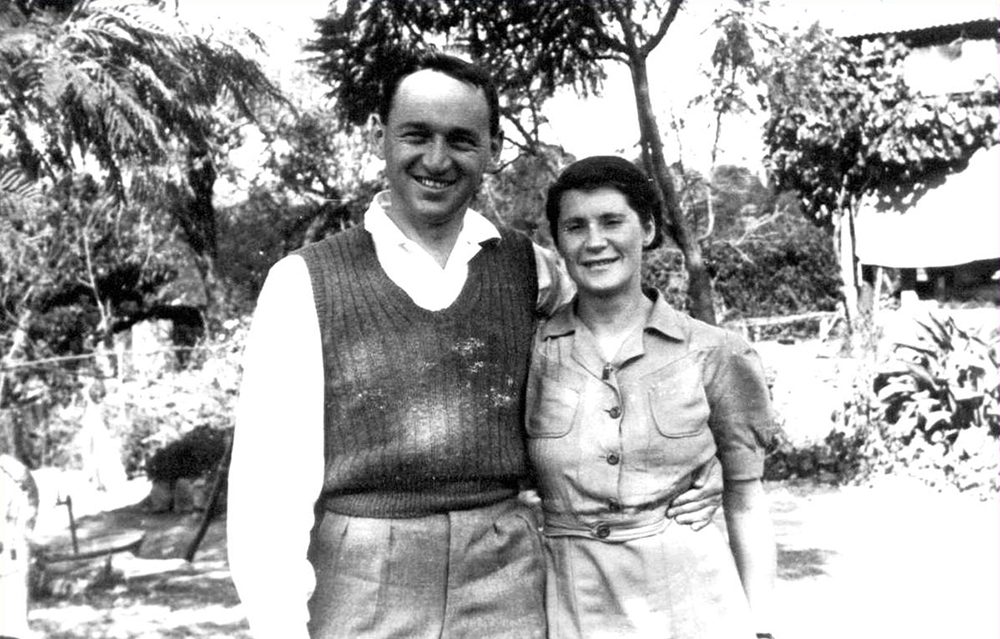
Courtesy Jeremy D. Kark, MD, PhD
Unlike public health, which focuses on health equity and impacts to the health of the population of a particular community, global health centers issues impacting health that can transcend national boundaries. Doing so often requires global cooperation to improve health equity among nations and for all people.
While both fields are multidisciplinary, with public health typically combining health and social sciences, global health often includes fields such as environmental sciences, international relations and more. Global health seeks to build on the work done in the public health sphere in order to ensure consistent care regardless of where people live. Institutions such as the World Health Organization (WHO), which was established by the United Nations in 1948, and the Pan American Health Organization (PAHO), established in 1902 and later brought under the umbrella of WHO, work to improve sanitation, provide immunizations, and lower infant mortality rates across the globe.
Additionally, individual nations with the means to provide assistance, such as the United States, have contributed to global health initiatives. From 1961 to July 2025, the U.S. Agency for International Development (USAID) facilitated aid for underfunded nations around the world, with health becoming their largest sector in the 1990s.

Courtesy Dan Bernstein
Improving healthcare on a global scale is important work, some of which starts right here at home. The UC Davis Center for Global Health, located on the UC Davis Health campus in Sacramento, has several ongoing projects, including those focused on neuroimaging data, HIV care, and emergency medicine training. In order to do this work, the center encourages collaboration among various fields such as human medicine, nursing, veterinary medicine, agriculture, environmental sciences, engineering, management, public welfare, and international development.
Global health reminds us that the challenges faced by communities worldwide are deeply interconnected. At UC Davis, our commitment to global health centers on building sustainable partnerships, advancing medical education and care in resource-limited settings, and creating pathways for learners and faculty to engage in meaningful, equity-driven work that improves health outcomes locally and globally.
— N. Shakira Bandolin, M.D., Director of Global Health, Center for Global Health, University of California Davis Health
Medical students at UC Davis have the opportunity to engage in research and hands-on field work through the area of scholarly concentration (ASC) in global health, an elective that motivates learners to make a difference in the world by teaching them to ethically and responsibly collaborate with UC Davis’ global partners. Residents and fellows interested in global health can also find funding and support through the center.

Courtesy DMAT San Diego CA-4
Whether they’re lowering the barriers to access for primary care, providing live saving treatments and immunizations, or improving environmental conditions to prevent illness, the people working in the field of global health share a common goal: healthcare for all regardless of race, religion, ethnicity, or location.
To learn more about global health efforts from around the world, check out the online companion exhibit curated by the National Library of Medicine.
Resources and Further Reading
Items with an asterisk (*) at the end of the citation require the UCDH VPN or Library VPN login for off-campus access.
Databases
- GIDEON*
- This database is an interactive decision support system for diagnosis and reference in the fields of tropical and infectious diseases, epidemiology, microbiology and antimicrobial chemotherapy. Search or browse epidemiological data going back to 1348 AD, covering 230+ countries and territories. Over 25,000 outbreaks, 35,000 graphs, and 82,000+ surveys. Includes interactive tools to identify 2,000+ pathogens, diagnose and compare 360+ infectious diseases, as well as to explore the properties of 30,000+ trade names of drugs and vaccines. The application is updated every day by a team of highly regarded medical scientists.
- Global Health
- Global Health is a database dedicated to public health, containing journals, reports, books, and conference proceedings on international medical and health research. Global Health contains over 3 million scientific records from 1973 to the present. This includes abstracts from over 100 countries in 50 languages and all relevant non-English-language papers are translated.
Journals
- BMJ Global Health
- An open access, online journal dedicated to publishing high-quality peer-reviewed content relevant to those involved in global health, including policy makers, funders, researchers, clinicians and frontline healthcare workers.
- The Lancet Global Health
- Focuses on disadvantaged populations, be they whole economic regions or marginalized groups within otherwise prosperous nations, with a preference for the following topics: reproductive, maternal, neonatal, child, and adolescent health; infectious diseases, including neglected tropical diseases; non-communicable diseases; mental health; the global health workforce; health systems; surgery; and health policy.
- Journal of Global Health
- Focuses on works which seek to improve our understanding of global health and provide practice guidelines to address health-related issues in the developed and developing world.
- Globalization and Health
- A transdisciplinary journal dedicated to improving the health-related decisions of researchers, practitioners, governments, civil societies, and United Nations agencies.
- Annals of Global Health
- A peer-reviewed, fully open access, online journal dedicated to publishing high quality articles dedicated to all aspects of global health.
- Pathogens and Global Health *
- A journal of infectious disease and public health that focuses on translating molecular, immunological, genomic, and epidemiological knowledge into control measures for global health threats.
- Global Public Health
- An international journal that publishes research on public health including the social and cultural aspects of global health issues. Converted to a full Open Access journal from Volume 18 (2023). Journal coverage from 2006 to 2009 available to UCD affiliates.
Books
- Farmer, Paul. Infections and Inequalities : The Modern Plagues. University of California Press, 2001.
- Farmer writes from the front lines of the war against modern plagues like AIDS and shows why, even more than those of history, they target the poor.
- Available by request for UCD affiliates
- Farmer, P. (2003). Pathologies of power : health, human rights, and the new war on the poor. University of California Press.
- Argues that promoting the social and economic rights of the world’s poor is the most important human rights struggle of our times.
- Available by request for UCD affiliates
E-Books
- Farmer, Paul. Aids and Accusation : Haiti and the Geography of Blame. University of CA Press, 2006.*
- The first full-length ethnographic study of AIDS in Haiti. First published in 1992 this new edition has been updated and a new preface added.
- Quigley, F. (2009). Walking together, walking far : how a U.S. and African medical school partnership is winning the fight against HIV/AIDS (1st ed.). Indiana University Press.*
- A remarkable partnership between the Indiana University School of Medicine and the Moi University School of Medicine in Kenya has built one of the most comprehensive and successful programs in the world to control HIV/AIDS.
- Farmer, Paul, and Jonathan Weigel. To Repair the World : Paul Farmer Speaks to the next Generation. University of California Press, 2013.*
- In this book, conceived of as a graduation gift for students write large, Farmer addresses the challenges facing young people with a call for them to change the world and become activists.
- Farmer, Paul. Reimagining Global Health : An Introduction. University of California Press, 2013.*
- Bringing together the experience, perspective and expertise of Paul Farmer, Jim Yong Kim, and Arthur Kleinman, Reimagining Global Health provides an original, compelling introduction to the field of global health.
- Yamin, A. E. (2016). Power, suffering, and the struggle for dignity : human rights frameworks for health and why they matter (1st ed.). University of Pennsylvania Press.*
- Provides a solid foundation for comprehending what a human rights framework implies and the potential for social transformation it entails.
- Mukherjee, J., & Farmer, P. (2018). An introduction to global health delivery : practice, equity, human rights. Oxford University Press.*
- A short but immersive introduction to global health’s origins, actors, interventions, and challenges that delivers a clear-eyed overview of the movement underway to reduce global health disparities and establish sustainable access to care.
- Walker, A., Agarwal, A., & Jain, Y. (Eds.). (2023). 50 studies every global health provider should know. Oxford University Press.*
- Recognizes and summarizes studies that have transnational implications for healthcare among marginalized populations due to geographic, cultural, or socioeconomic reasons.
- Biehl, J. G., & Adams, V. (Eds.). (2023). Arc of interference : medical anthropology for worlds on edge. Duke University Press.*
- Creatively assembled around Arthur Kleinman’s medical anthropological arc and eschewing hegemonic modes of intervention, they advance the notion of a care-ful ethnographic praxis of interference.
- Jacobsen, K. H. (2024). Introduction to global health (Fourth edition.). Jones & Bartlett Learning.*
- A comprehensive examination of the key global health issues today that aligns with key global health frameworks such as the Sustainable Development Goals (SDGs) and the newly approved CUGH learning objectives.
Videos
- Kanopy. Faces of Change series: 22 episodes. (1983, 9hr 29min).*
- A series of 26 films, funded by the National Science Foundation, produced by Norman Miller and documented by some of the finest ethnographic filmmakers of our time, covers five cultures selected for the diversity of their geographic location.
- Kanopy. At Highest Risk. 2006. 43min.*
- Through the compelling story of one Andean woman, Judyth Aguero Vega, we see the horrors and triumphs of Peru’s volatile health care situation.
- “60 Minutes. Dr Farmer’s Remedy.” (12:47 min). Columbia Broadcasting System, 2008.*
- A 12-minute segment from 60 minutes detailing the career of Dr. Paul Farmer
- Users must create a free account with the Proquest resource “alexander street” to view this episode of 60 minutes.
- Kanopy. Emergency Medicine: A year at Oamaru Hospital. 2015. 44min.*
- A gritty and realistic look at what it is REALLY like working on the medical front line in a rural New Zealand hospital whose funding is under threat.
- Kanopy. The Gateway Bug: Feeding Humanity in an Uncertain Age. 2016. 1hr 24min.*
- Explores how changing daily eating habits can feed humanity in an uncertain age, one meal at a time.
- Kanopy. Gather. 2020. 1hr 14min.*
- Follows the stories of natives on the frontlines of a growing movement to reconnect with spiritual and cultural identities that were devastated by genocide.
- Kanopy. How I live. 2020. 1hr 27min.*
- Follows the journeys of four children with cancer in Guatemala, El Salvador, Myanmar, Egypt and Ghana. Following them from diagnosis through treatment, the complex issues facing patients, families and healthcare providers emerge.
- Kanopy. Vicenta. 2020. 1hr 9min.*
- A claymation film about Vicenta, a poor woman from suburban Buenos Aires who starts a fight against the Argentine State in pursuit of what she believes is fair: the legal interruption of her daughter’s pregnancy.
- Kanopy. I lost my mom: J’ai place ma mere. 2022. 1hr 15min.*
- In the style of a film diary, this documentary immerses us in the personal experience of the filmmaker and his sister as they try to ensure their mother can end her days with dignity in the CHSLD (Long-term care centre) system.
- Kanopy. Riada. 2024. 1hr 40min.*
- An ethnographic inquiry into the impacts of a controversial infrastructure project that stopped Colombia’s second most powerful waterway: the Hidroituango dam.
- Kanopy. Whose Water? 2024. 1hr 5min.*
- Examines how the erosion of democracy prevents millions of people from accessing this basic necessity of life, and offers concrete solutions to address this unprecedented human rights crisis.
Webpages
- Duke Global Health Institute
- Duke’s Global Health Institute, formed in 2006, brings together knowledge and resources from across the university to address the most important global health issues of our time.
- Global Health Observatory from the World Health Organization
- WHO’s Global Health Observatory (GHO) is a repository for health-related statistics for its 194 Member States
- Health Topics Menu from the World Health Organization
- WHO’s health topics menu allows users to explore various health concerns and conditions. Topics include abortion, pollution, patient safety and many more
- Research4Life
- Aims to improve teaching, research and policy-making in health, agriculture, the environment and other life, physical and social sciences. There are five content collections: Research for Health (Hinari), Research in Agriculture (AGORA), Research in the Environment (OARE), Research for Development and Innovation (ARDI) and Research for Global Justice (GOALI).